
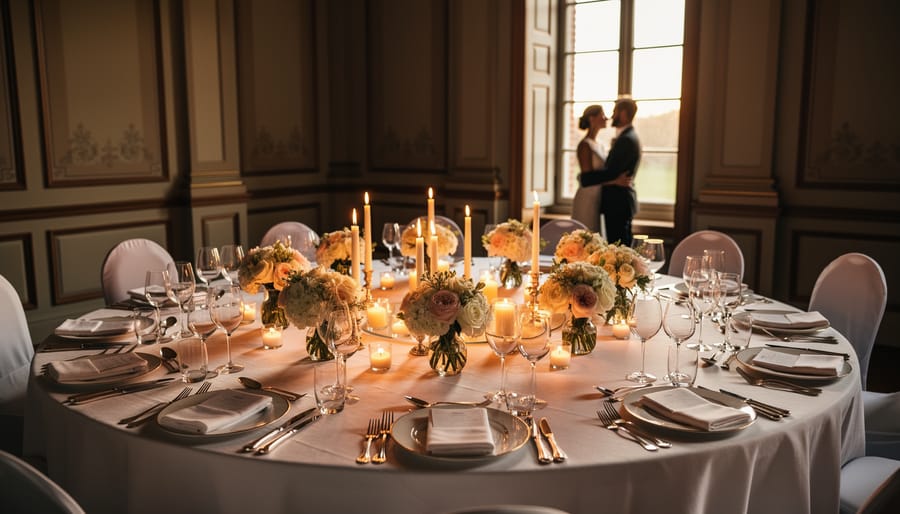
Small wedding venues succeed when they balance intimacy with flexibility, typically accommodating 2 to 120 guests while offering personalized packages that range from cozy private dining rooms to exclusive estate buyouts. The right venue transforms your celebration from a scaled-down version of a traditional wedding into something more meaningful: a curated experience where every detail reflects your relationship, every guest feels essential, and the atmosphere invites genuine connection rather than formal ceremony.
The shift toward intimate celebrations has reshaped what couples need from a venue. You’re not looking for a ballroom that seats 300; you’re searching for spaces that feel intentionally small rather than awkwardly empty. GEORGE Restaurant exemplifies this versatility, welcoming gatherings from just two guests up to 120, while heritage properties like Langdon Hall have dedicated intimate spaces such as Colonel Langdon’s Room and its adjoining Conservatory specifically designed for smaller parties. These venues understand that a 40-person wedding deserves the same level of sophistication and service as a 200-person affair, just with a completely different energy.
What makes small wedding venues distinct is their ability to foster presence. Your photographer won’t spend the day racing between sprawling locations. Your guests won’t wander through empty corridors wondering where everyone went. Instead, you’ll gather in spaces where conversation flows naturally, where you can greet every person who came to celebrate with you, and where the venue’s character becomes part of your story rather than just a backdrop.
What Defines a Small Wedding Venue (and Why It Matters)
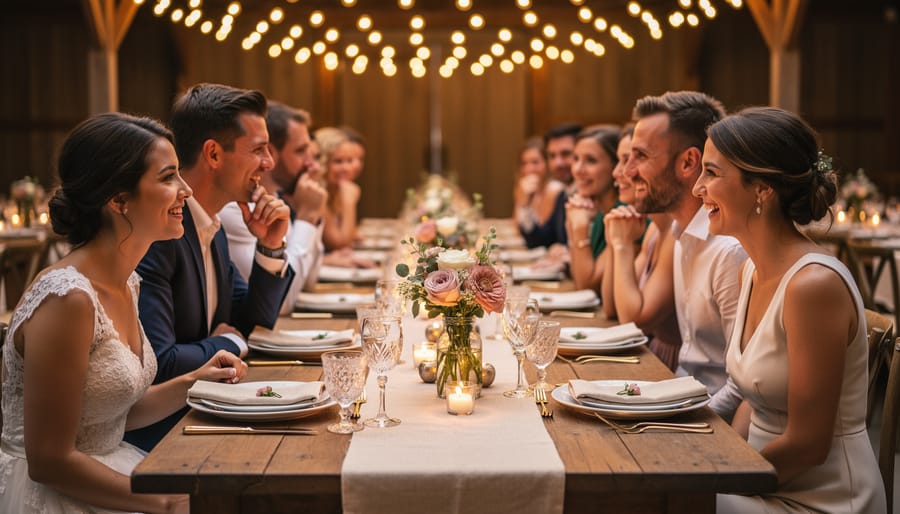
A small wedding venue isn’t just about square footage. It’s about spaces purposefully designed or adapted to make gatherings of 2 to 50 guests feel just right, not lost in a cavernous ballroom meant for 200.
The difference matters more than you might think. When you book a venue that caters specifically to intimate celebrations, you’re choosing a space where every architectural detail, from table arrangements to lighting, works at your scale. A restaurant like GEORGE Restaurant, which accommodates anywhere from 2 to 120 guests, can dial its layout and service to fit your exact group size. That flexibility creates an atmosphere where your guests feel genuinely together, not scattered across empty tables.
This is where terminology gets murky. Micro weddings typically mean fewer than 20 guests with a strong focus on experience over formality. Elopements are often just the couple, maybe with a witness or two. Small weddings sit in that sweet spot of 20 to 50 people, still intimate enough to have meaningful conversations with everyone, yet substantial enough to create the energy and celebration you envision.
Why does this distinction matter when you’re venue hunting? Because a large venue willing to host your small wedding isn’t the same as a small wedding venue. Historic properties like Langdon Hall understand this, which is why they designate specific spaces, the Colonel Langdon’s Room and adjoining Conservatory, for intimate celebrations rather than just cordoning off a corner of their grand ballroom.
The right small venue embraces your guest count. It doesn’t make you feel like you’re apologizing for it.
Key Factors to Consider When Choosing Your Venue
Guest Capacity and Space Flexibility
When you’re planning a small wedding, the gap between minimum and maximum capacity becomes your most important venue metric. A space that seats 2 to 120 guests, like GEORGE Restaurant, sounds flexible on paper, but what you really need to know is whether it feels intentional and intimate at the low end of that range.
Most couples assume smaller venues automatically scale down well. They don’t. A private dining room designed for 40 that holds 12 will feel sparse and echoey. The sweet spot is finding venues with architectural features that naturally define smaller zones: alcoves, banquettes, a corner fireplace that anchors the room. Ask to see photos of celebrations at your specific guest count, not just the venue’s maximum capacity.
Pay attention to how the venue describes its capacity ranges. If they market themselves for gatherings of 50 to 200 but technically accept bookings for 15, you’re likely an afterthought. Look instead for venues that list your size first or maintain dedicated spaces for intimate celebrations. The room should feel full and warm with your guest list, not like you’re rattling around in someone else’s leftover space.
Pricing Structure and Minimum Spend Requirements
Small wedding venues flip the traditional pricing model on its head. Instead of paying per guest, you’ll typically encounter a minimum spend requirement, essentially a floor amount you agree to spend on food, beverages, and sometimes venue rental combined. In Markham, for example, wedding ceremony venues average around C$2,000 minimum spend per event, though this varies widely based on day of the week, season, and what’s included.
This structure can actually work in your favour. If you’re hosting 20 guests and the minimum is C$2,000, you’re spending C$100 per person, which often buys a much more elevated dining experience than a standard wedding package. The key is understanding exactly what counts toward that minimum: does it include tax, gratuity, and bar service, or just food? Some venues apply the minimum to everything; others exclude certain fees.
What’s typically negotiable? Off-peak dates (weekdays, winter months) and sometimes the service charge percentage. What isn’t? The base minimum itself, especially at popular venues during peak season. Always ask for an itemized breakdown showing how your estimated guest count and menu selections will meet or exceed the minimum, so there are no surprises when the final invoice arrives.
Atmosphere and Intimate Ambiance
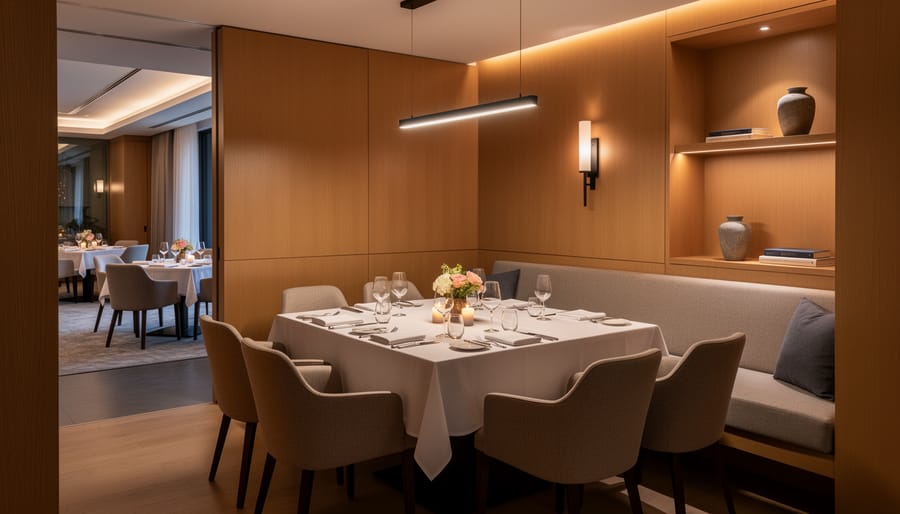
The architecture of your venue shapes every moment of your celebration in ways that go far beyond aesthetics. In a small wedding, where every guest can see and feel the entire room, the space itself becomes part of your story.
Rooms designed for intimacy, like restaurant private dining spaces or conservatories with natural light, wrap around your gathering rather than swallowing it. When you choose a space scaled to your guest count, conversation flows naturally across the room. Your photographer captures connection, not empty chairs. Compare this to a ballroom built for 200: even with elegant décor, fifty guests scattered across vast floor space create visual and emotional distance that no amount of candlelight can overcome.
Consider the difference between a conservatory adjoining a historic room, where glass walls blur the boundary between celebration and gardens, and a hotel ballroom where the ceiling soars three stories above your cake table. One feels like an embrace; the other, like you’re borrowing someone else’s wedding for the afternoon.
Pay attention to ceiling height, window placement, and sightlines during your tour. Can guests at opposite ends of the room make eye contact? Does afternoon light fill the space, or will you rely entirely on artificial lighting? The warmth you’re after comes from proportion and thoughtful design, not square footage.
Booking Timeline and Package Availability
Don’t assume that planning a small wedding means you can book on a shorter timeline. Popular intimate venues fill their calendars just as quickly, and sometimes faster, than larger properties. The reality is that venues with limited availability for small celebrations often operate months or even a year ahead, especially if they’re balancing multiple event types or maintaining exclusivity.
Venues like Langdon Hall issue separate wedding packages for 2026 and 2027, signaling that couples should begin their search well in advance of their preferred date. This isn’t unusual; desirable dates for intimate weddings (think spring weekends, early fall, and holiday periods) book up quickly because the venue can only host one celebration at a time. If you’re eyeing a specific season or month, start your search 12 to 18 months out to secure your first-choice venue.
The booking window also matters if you’re considering weekend wedding venues that accommodate overnight guests, since accommodations add another layer of coordination. Ask each venue about their typical booking lead time and whether they offer flexibility if your guest count is still uncertain when you sign the contract.
Types of Small Wedding Venues Compared
Restaurant Private Dining Rooms
Restaurant private dining rooms solve one of the biggest challenges couples face when planning small weddings: finding a space that feels full and alive with just twenty or thirty people. Instead of a corner of a banquet hall, you get a room designed to feel complete with your guest count. GEORGE Restaurant, for example, accommodates anywhere from 2 to 120 guests, meaning they can configure spaces that work whether you’re hosting eight or eighty.
The built-in catering is the real advantage here. Your venue and your food come from the same team, which eliminates the vendor coordination headaches and often results in fresher, more thoughtfully prepared meals. You’re working with chefs who know their kitchen and can usually customize menus based on your preferences rather than choosing from a standard banquet menu.
Most restaurant venues offer flexible capacity within their private rooms, so you’re not locked into hitting a specific guest minimum or dealing with awkward empty tables. The atmosphere feels naturally intimate because these spaces were designed for dining and conversation, not ceremony processions or dancing. If your celebration centers around a beautiful meal with the people you love most, a restaurant venue delivers exactly that experience.
Historic Estate Smaller Spaces
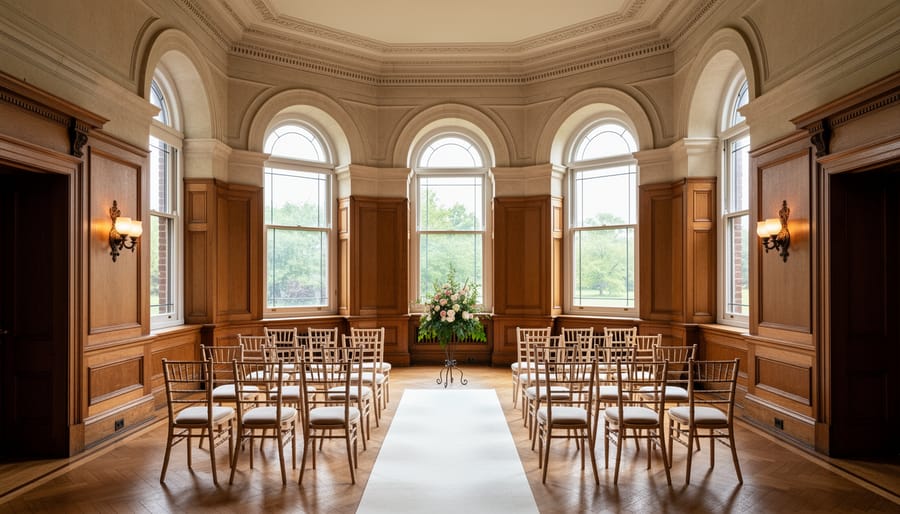
Historic estate venues offer something truly special for intimate weddings: the grandeur and character of a significant property, distilled into spaces purposefully designed for smaller gatherings. Think of venues like Langdon Hall, where designated rooms such as Colonel Langdon’s Room and the adjoining Conservatory provide all the elegance of a historic setting without the cavernous feel of a 200-person ballroom.
These spaces typically feature architectural details you won’t find in modern venues, original millwork, heritage fireplaces, period furnishings, and the kind of craftsmanship that tells a story. Your celebration unfolds in a room that feels both grand and intimate, where 20 to 50 guests can gather comfortably surrounded by beauty and history. Many estates offer the grounds for photographs while keeping your actual ceremony and reception in a smaller, more personal space.
The practical advantage? You get access to professional event coordination, established catering relationships, and often overnight accommodations, all within a property that’s been hosting celebrations for decades. When booking historic venues, note that popular estates like Langdon Hall release separate packages for each wedding season, 2026 and 2027 bookings are already underway, so plan well ahead to secure your preferred date.
Boutique Hotels and Inns
Boutique hotels and inns deliver seamless convenience for intimate weddings, especially when you’re hosting guests from out of town. With ceremony space, reception area, and overnight rooms all under one roof, you eliminate the logistics puzzle of shuttling people between locations. Most properties in this category comfortably accommodate 20 to 50 guests, making them ideal for celebrations where half your attendees are traveling.
The built-in accommodation advantage goes beyond convenience. Your wedding weekend becomes a true gathering, with morning-after brunch and lingering goodbyes instead of everyone scattering immediately after the reception. Many boutique properties offer buyout options for exclusive use, transforming the entire inn into your private celebration space.
Expect package pricing that bundles ceremony setup, reception space, and a room block, often with perks like complimentary suites for the couple and simplified coordination with an on-site event manager. The trade-off is less flexibility than a standalone venue, you’re working within the property’s existing aesthetic and vendor relationships, but for couples prioritizing guest experience and hassle-free planning, that structure is exactly the appeal.
Gardens, Conservatories, and Outdoor Intimate Spaces
Gardens and conservatories offer something special for small weddings: natural beauty that does the decorating for you. These venues bring the outdoors in (or frame your celebration with living walls and open sky), creating an atmosphere that feels both romantic and effortlessly elegant. You’re working with seasonal blooms, dappled sunlight, and the kind of organic backdrop that photographs beautifully without extensive styling.
For intimate gatherings, these spaces scale perfectly. A conservatory with floor-to-ceiling glass or a walled garden can feel full and intentional with 20 guests in a way that a ballroom never could. The light is softer, the setting more personal, and your guests experience the celebration surrounded by greenery rather than empty chairs.
The trade-off? Weather contingency planning is non-negotiable, even for covered conservatories where temperature and humidity can shift. Ask venues about backup plans, heating or cooling options, and how they handle unpredictable conditions. Seasonal timing matters too, book during your preferred blooming period, and confirm what the space looks like in that specific month. When it works, though, nothing beats the warmth of celebrating your marriage in a space that feels alive.
Our Recommendations: Matching Venue Type to Your Vision
For Culinary-Focused Couples
When food is more than sustenance, when it’s a language of love and a shared experience you want to savor with your closest people, a restaurant venue becomes the natural choice. These spaces are built around the culinary experience, with chefs who understand that your wedding menu isn’t just catering, it’s a central element of your celebration.
Look for venues where you can work directly with the chef to design a personalized tasting menu rather than choosing from pre-set packages. The best restaurant venues encourage collaboration: discussing seasonal ingredients, accommodating dietary preferences thoughtfully, and creating dishes that tell your story. Ask whether wine pairings can be customized, if you can taste dishes before finalizing the menu, and how much creative input you’ll actually have.
Restaurant settings also solve the atmosphere challenge beautifully. The kitchen energy, the thoughtful plating, the flow of courses, these create natural rhythm and conversation. Your guests aren’t just fed; they’re hosted with the same care the restaurant extends every night, scaled to the intimacy of your celebration.
For Tradition with Intimacy
Historic estates understand something crucial about intimate weddings: you want the romance and gravitas of a storied venue without rattling around in a 300-person ballroom. Properties like Langdon Hall solve this beautifully by designating specific small-wedding spaces, the Colonel Langdon’s Room and adjoining Conservatory create classic elegance scaled perfectly for 20-40 guests. You get the manicured grounds, the architectural heritage, the sense of occasion, but in rooms designed to feel full and warm with your actual guest count.
The trade-off is planning horizon. Venues issuing separate 2026 and 2027 wedding packages signal how far ahead you’ll need to book, even for a small celebration. These properties typically bundle ceremony space, reception room, and curated vendor lists into packages rather than offering à la carte pricing. Ask what the package includes, some cover florals and linens, others just the venue rental, and whether you can customize menus or bring your own photographer. The right historic venue transforms your intimate wedding into something timeless without sacrificing the closeness that drew you to a small celebration in the first place.
For Budget-Conscious Celebrations
Minimum spend requirements sound intimidating until you understand what they actually mean: the venue guarantees itself a certain dollar amount, whether from food, beverages, or rentals. For budget-conscious couples, this model can work in your favour if you’re strategic. A venue with a C$2000 minimum spend that includes ceremony space, tables, chairs, and catering might cost less overall than paying separate fees for each element.
The key is asking exactly what counts toward that minimum. Does bar service count? Cake cutting fees? Service charges and gratuities? Some venues include linens, centrepieces, and even basic florals in their packages, while others charge separately for everything beyond the meal. Request an itemized breakdown during your tour. Calculate your true per-guest cost by dividing the minimum by your actual guest count, then compare that figure across venues with different pricing models. You’ll often find that a slightly higher minimum at a venue with more inclusions costs less than a lower minimum with endless add-ons.
For Seasonal and Outdoor Lovers
Garden and conservatory venues offer natural beauty that photograph exceptionally well while maintaining the intimacy small weddings need. Spaces like Langdon Hall’s Conservatory demonstrate how the right design brings the outdoors in without exposing your celebration to weather risk. These venues typically accommodate 20-40 guests comfortably, where every person can see and hear vows exchanged against a backdrop of greenery and light.
The key is planning for both your ideal scenario and reality. Even covered conservatories can be affected by temperature extremes, so ask about climate control. For open gardens, you need a full indoor backup option, not just tents. The best approach is to embrace seasonality rather than fight it: spring blooms and autumn foliage create stunning natural decor that reduces your styling budget, while summer heat and winter cold demand venues with proper indoor alternatives ready to use without last-minute scrambling.
Common Mistakes to Avoid When Booking Small Wedding Venues
Underestimating the Booking Lead Time
Don’t assume a smaller guest list means shorter planning horizons. The most sought-after intimate venues often book faster than large ballrooms because they have fewer event dates available. A restaurant private dining room might host only one wedding per weekend, while a convention centre can accommodate several. When a venue issues separate 2026 and 2027 wedding packages, as properties like Langdon Hall do, they’re signaling that couples are booking 12 to 18 months out even for celebrations with 30 guests.
Peak season Saturday evenings disappear first, sometimes a full year ahead. If you’ve fallen in love with a specific space, contact them as soon as your date is firm rather than after you’ve finalized other details. Flexibility with your wedding date gives you more options, but procrastination costs you your first choice regardless of your guest count.
Overlooking Hidden Costs in Minimum Spend Models
Minimum spend means the venue requires you to purchase at least that dollar amount in food, beverage, and sometimes service charges, regardless of your actual guest count. A C$2000 minimum spread across 15 guests differs dramatically from the same minimum for 40 people. Calculate the per-person cost by dividing the minimum by your realistic guest count, then compare that figure to traditional per-plate pricing.
The critical questions: what counts toward the minimum? Does bar service count, or only food? Are gratuities, service fees, and taxes included in that calculation or added on top? Some venues count rental fees toward the minimum while others charge them separately. Ask for an itemized breakdown showing exactly what you must purchase versus what you can add. Request a sample invoice for a wedding similar to your size so you can see the true final cost, including all fees and charges that appear only at checkout.
Choosing a Venue That Doesn’t Scale Down Well
A 200-guest ballroom with twenty people scattered across it doesn’t photograph well, and it feels worse in person. Large venues rely on crowds to create energy. When you book a space designed for scale, you inherit problems intimate venues never have: tables clustered awkwardly in one corner to avoid the void, echoing acoustics that make conversation feel hollow, and ceremony photos where your guests look lost in an ocean of empty chairs.
The atmosphere suffers most. Your small group can’t generate the warmth needed to fill a cavernous room. Even exceptional décor struggles to overcome the feeling that something’s missing. From a photographer’s perspective, I’ve watched couples spend thousands trying to fill visual gaps that wouldn’t exist in a right-sized space. The images tell the truth: empty dance floors, unused lounges, and reception shots that emphasize absence rather than intimacy.
Choose a venue proportioned for your headcount. A private dining room seating fifty feels abundant with forty guests. That same forty in a 300-person hall looks sparse, no matter how you arrange them.
Forgetting to Consider Your Vendors’ Needs

I’ve photographed intimate weddings where couples fell in love with a charming venue, only to discover on the day that there was nowhere for the string quartet to set up without blocking the ceremony sightlines, or that the kitchen access forced catering staff to walk through every shot. Small venues can create logistical challenges that larger ballrooms avoid simply through scale, and overlooking vendor needs often surfaces too late to fix.
Start by asking where your photographer can position themselves for ceremony coverage without standing in guest sightlines, in spaces seating 20 people, every angle matters. Request information about natural light sources and backup locations for environmental portraits if weather turns. Inquire about load-in access for musicians and caterers, especially in restaurant private rooms or historic buildings with narrow doorways or stairs. Confirm whether vendors can store equipment discreetly and whether the space allows your DJ or band to set up without dominating the room visually. These practical considerations protect the intimate atmosphere you’re creating while ensuring your professional team can deliver their best work.
Questions to Ask Before You Book
Walking into a venue tour excited about the space is wonderful, but leaving with a signed contract requires clear answers to practical questions. These conversations protect your vision and your budget while ensuring the venue truly fits your celebration.
Start with capacity specifics. Ask whether they can comfortably accommodate your exact guest count, not just whether you fall within their range. A venue like GEORGE Restaurant lists capacity from 2 to 120 guests, but you’ll want to know how the space feels and functions at your specific number. Request to see photos from weddings similar in size to yours, and ask which room configuration they recommend.
Pricing transparency matters enormously for small weddings. Beyond the advertised minimum spend, which averages around C$2000 in venues across Markham, you need to understand what that figure includes and what costs extra. Does it cover ceremony and reception space, or just one? Are tables, chairs, and linens part of the package, or separate rentals? What about service charges, gratuities, and taxes on top of the minimum?
Vendor policies can make or break your planning experience. Some venues maintain preferred vendor lists; others require you use their in-house catering. Ask whether you can bring your own photo and video package professionals, or if there are restrictions. Confirm load-in times for vendors and whether there’s adequate space for photographers to work during getting-ready moments. If you’re planning events beyond the reception, weighing options like a welcome party vs rehearsal dinner, ask if the venue can accommodate multiple events.
What’s included in your minimum spend requirement?
Ask for an itemized breakdown showing what the minimum covers, typically food and beverage, but sometimes rentals, service, or facility fees. Understanding inclusions helps you compare venues accurately and budget for additional costs.
Can you accommodate our exact guest count comfortably?
Request to see the space set up for a wedding your size, or at minimum, photos from similar events. A venue’s capacity range tells you legal limits, not whether your specific number will feel right in the space.
What package years are currently available for booking?
Some venues like Langdon Hall release separate packages for 2026 and 2027, with different pricing and availability. Confirm which year’s package applies to your date and whether rates are locked or subject to increase.
What’s your cancellation and rescheduling policy?
Understand deposit requirements, cancellation deadlines, and whether you can transfer your date if circumstances change. Small venues often have limited availability, making flexibility policies crucial.
Timeline and booking details close the conversation. Ask how far in advance they typically book for intimate weddings, popular small venues fill their calendars just as quickly as large ones. If they offer year-specific packages like the separate 2026 and 2027 options at some estates, confirm which package year your date falls under and whether pricing is guaranteed or subject to adjustment. Get clarity on deposit amounts, payment schedules, and what happens if you need to reschedule.
These questions aren’t about being difficult. They’re about ensuring the venue you fall in love with during a tour remains the right choice when you’re standing in it on your wedding day, surrounded by the people who matter most.
Your small wedding isn’t about what you’re leaving out. It’s about what you’re keeping close: the people who’ve shaped your love story, the conversations that matter, the moments you’ll actually remember.
The venue you choose becomes more than a backdrop. It holds the laughter around your table, the tears during your vows, the warmth of being surrounded only by those who truly know you. When you select a space that reflects your story rather than someone else’s expectations, everything else falls into place. The right restaurant private room, historic conservatory, or garden setting doesn’t just accommodate your celebration, it amplifies the intimacy you’re creating.
We’ve spent years photographing these moments, and we know this: the couples who trust their vision and choose venues that feel like themselves create the most honest, beautiful celebrations. These are the weddings where every frame captures genuine connection, where you’ll want to invest in an album because every image holds meaning.
Your small wedding deserves a space as intentional and heartfelt as your love. Choose it with confidence.