
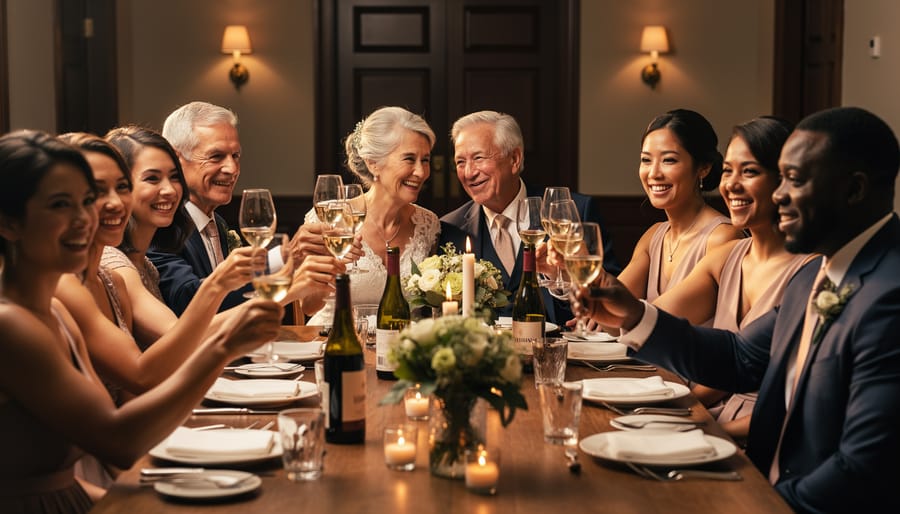
If you’re choosing between booking a photographer for just one pre-wedding event, the rehearsal dinner typically delivers more meaningful coverage because it’s an intimate gathering of your closest family and inner circle sharing toasts, laughter, and emotional moments that welcome parties rarely capture. Your wedding weekend unfolds across multiple celebrations, and understanding the photography value of each helps you invest where the memories matter most.
We’ve photographed hundreds of pre-wedding events, from sprawling welcome cocktail hours to tearful rehearsal dinners in private dining rooms, and the distinction between these two gatherings isn’t just timing or formality. It’s about who’s in the room and what you’ll want to remember. Welcome parties cast a wide net, bringing together out-of-town guests, distant relatives, and friends who haven’t met yet. They’re festive and social, but the energy scatters across conversations and mingling. Rehearsal dinners, by contrast, gather the people who’ve shaped your love story: your parents, grandparents, wedding party, and maybe a handful of extended family. The toasts go deeper. The embraces linger. The photography tells stories instead of simply documenting a crowd.
For couples torn between coverage options or budget constraints, the decision comes down to relationship depth versus guest experience. If you’re hosting a destination wedding where many guests traveled far and you want to capture the joy of everyone reuniting, a welcome party photographer makes sense. But if your priority is preserving the raw emotion of your mom’s toast or your best friend’s speech, the rehearsal dinner offers irreplaceable moments that welcome parties simply don’t generate at the same frequency or intensity.
At-a-Glance: Welcome Party vs. Rehearsal Dinner
Here’s a quick breakdown of how welcome parties and rehearsal dinners stack up when you’re deciding where to invest your photography budget. We’ve photographed both types of events across hundreds of wedding weekends, and these distinctions shape what we capture and how couples remember their celebration.
| Factor | Welcome Party | Rehearsal Dinner |
|---|---|---|
| Guest List | All wedding guests, especially out-of-towners | Wedding party, immediate family, sometimes close friends |
| Typical Timing | Evening before wedding, often 6-9pm | After rehearsal, usually 7-10pm night before |
| Formality Level | Casual, relaxed atmosphere | Semi-formal to intimate |
| Photography Style | Candid, photojournalistic mingling shots | Documentary coverage of toasts and heartfelt moments |
| Best Moments | Joyful reunions, crowd energy, anticipation | Emotional speeches, family connections, wedding party bonds |
The choice between these events comes down to what story you want preserved. Welcome parties give you the wide angle, capturing the full community that traveled to celebrate with you. The energy is loose, conversations flow freely, and you get everyone in the frame. Rehearsal dinners zoom in tight on your inner circle. The moments are quieter but often more emotionally charged, with parents sharing stories about watching you grow up and best friends roasting you affectionately.
From behind the lens, we approach each event differently. Welcome parties call for roaming coverage that catches spontaneous laughter and the buzz of reunion. Rehearsal dinners need a photographer who knows when to step back during intimate toasts and when to move in close for that tearful hug between you and your mom. Both matter, but they serve entirely different purposes in your wedding weekend narrative.
What Is a Welcome Party?
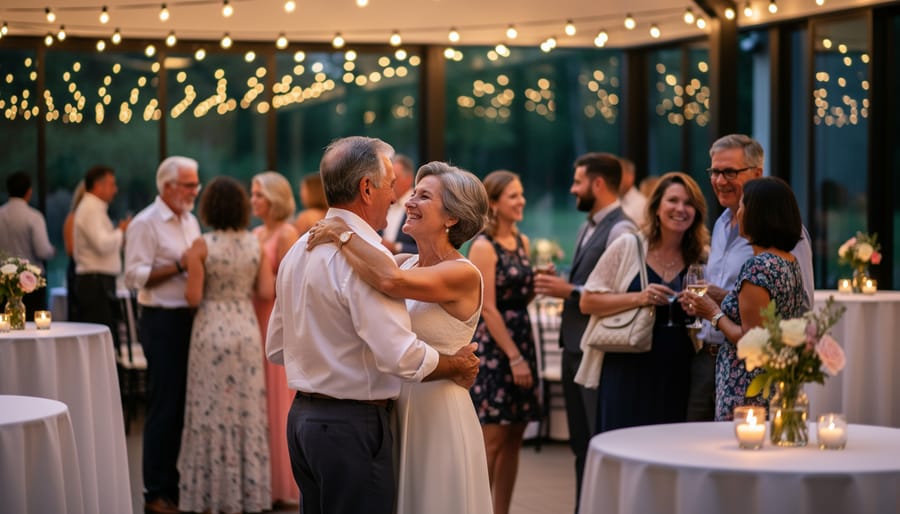
A welcome party is exactly what it sounds like: a big, open-arms gathering designed to kick off your wedding weekend and bring everyone together before the big day. Unlike the more intimate rehearsal dinner, this event throws the doors wide open to your entire guest list, family, friends, college roommates, coworkers, plus-ones, creating an inclusive celebration where travelers who’ve journeyed from different corners of the country (or world) can finally meet face-to-face.
We’ve photographed dozens of these gatherings, and they consistently deliver a specific energy that’s hard to replicate elsewhere in the wedding timeline. The atmosphere is casual and buzzing with anticipation. Think cocktails on a patio, lawn games at sunset, or a backyard barbecue where your grandmother chats with your best friends from grad school. There’s no assigned seating, no formal program, just the organic flow of people reconnecting after years apart or meeting for the first time before they watch you say your vows.
- Guest List Scope
- Welcome parties typically include all wedding guests or at least everyone traveling from out of town, creating an inclusive atmosphere that sets the tone for the entire weekend.
- Typical Venues
- Common locations include hotel courtyards, casual restaurants, backyard spaces, brewery patios, or beach settings, anywhere that encourages mingling without feeling overly formal.
- Formality Level
- These events lean decidedly casual, with relaxed dress codes and laid-back vibes that help guests unwind after travel and ease into celebration mode.
- Primary Purpose
- The main goal is fostering connection among your community, introducing different social circles to one another, and building excitement before the wedding ceremony.
From a photography standpoint, welcome parties offer something rehearsal dinners rarely can: sheer variety and spontaneous joy. You’re not capturing a structured sequence of toasts. Instead, you’re documenting authentic moments as they unfold, the childhood friend who just met your partner’s college crew, your dad laughing with your college soccer team, the moment your two grandmothers discover they grew up in neighboring towns. These candid interactions showcase the full tapestry of relationships you’ve built over a lifetime, all converging in one relaxed space.
The photography style here is photojournalistic and free-flowing. We move through the crowd capturing genuine laughter, warm hugs, animated conversations, and those golden-hour snapshots that perfectly capture the anticipation humming through the air.
What Is a Rehearsal Dinner?
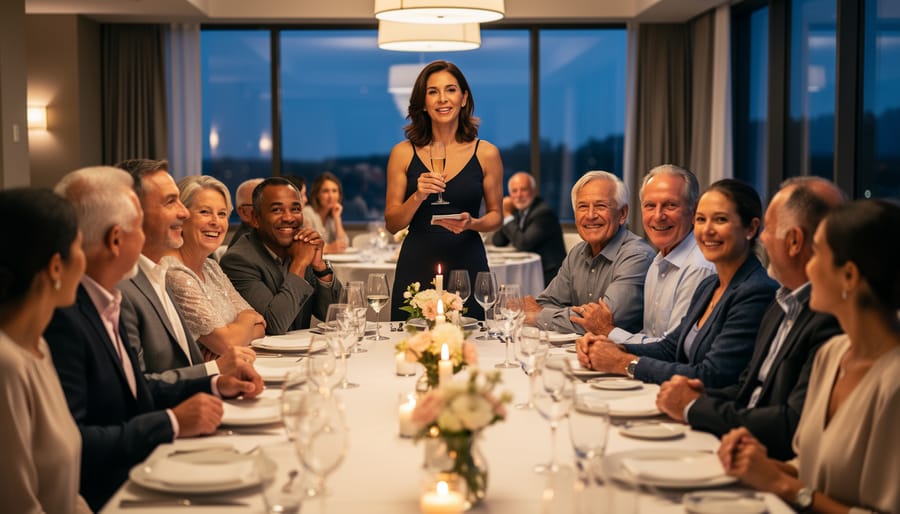
A rehearsal dinner is the traditional pre-wedding gathering held the evening after your ceremony run-through, bringing together the people most intimately involved in making your wedding day happen. This intimate event typically includes your wedding party, immediate family members, and the officiant, though many modern couples also extend invitations to out-of-town guests who traveled for the celebration.
The dinner serves multiple purposes beyond just feeding everyone after rehearsal. It’s your first opportunity to formally thank the people standing beside you on your wedding day, a chance for parents and close family to share heartfelt toasts without the larger crowd, and a moment to slow down and connect before the whirlwind of your wedding begins. Unlike the celebratory chaos that often defines wedding receptions, rehearsal dinners unfold at a more relaxed pace that allows for genuine conversation and emotional connection.
- Traditional Guest List
- Typically includes wedding party members, immediate family, the officiant, and sometimes out-of-town guests, generally ranging from 20 to 50 people depending on wedding party size.
- Typical Format
- Follows the wedding rehearsal with a seated dinner featuring multiple courses, toasts and speeches, and time for mingling before and after the meal.
- Formality Expectations
- Can range from casual backyard gatherings to upscale restaurant affairs, though most fall somewhere in between with smart casual or cocktail attire.
- Core Purpose
- To thank those participating in the wedding, allow families to bond before the ceremony, and create space for intimate toasts that might feel too personal for the larger reception crowd.
From a photography perspective, rehearsal dinners offer something uniquely valuable: unguarded emotional moments with your closest people. The speeches tend to be deeply personal, your best friend recounting college memories, your parents reflecting on watching you grow, your partner’s family welcoming you into their fold. These aren’t the polished, crowd-pleasing reception toasts; they’re raw, tearful, and often hilarious in ways that only happen when the audience is small and trusted.
When considering whether rehearsal dinner coverage belongs in your photo and video packages think about whether you want these private family moments preserved. Unlike all-inclusive packages that cover every wedding weekend event, most standard photography contracts focus solely on the wedding day itself, making the rehearsal dinner an intentional add-on that reflects how much you value documenting your inner circle’s celebrations.
Comparing Your Options: Which Event Fits Your Wedding Vision?
Guest Experience and Inclusivity
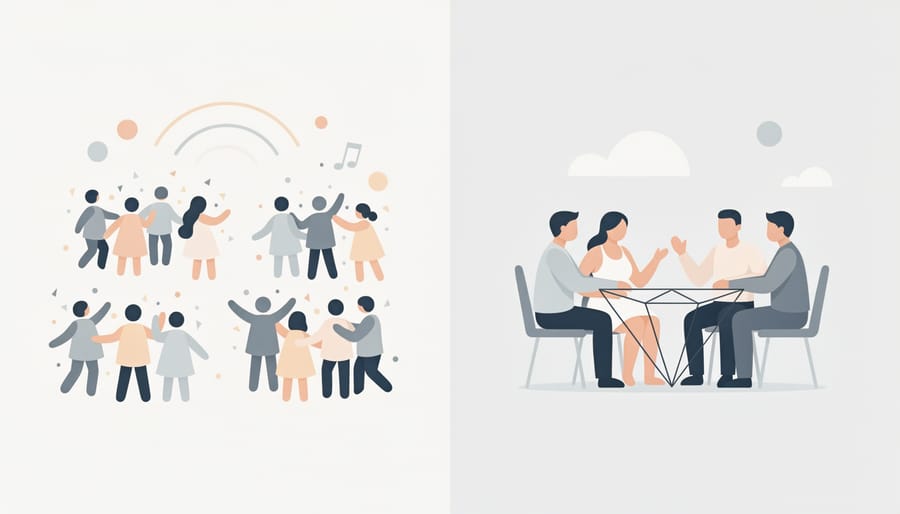
The guest list fundamentally shapes which event delivers more photographic value for your wedding weekend. We’ve photographed both types of gatherings countless times, and the distinction comes down to who you want preserved in your memories, and how that group interacts.
Welcome parties cast a wide net. When you invite everyone traveling for your wedding, college friends, distant relatives, colleagues, you create a buzzing atmosphere of reunion and anticipation. The photography captures genuine joy as guests who haven’t seen each other in years reconnect over cocktails. You’ll see your grandmother meeting your partner’s best friend, your college roommates chatting with your cousins. These wide shots of mingling groups and candid conversations document the full community gathering to celebrate you. For destination weddings or couples with many out-of-town guests, this inclusive approach means no one feels like an afterthought.
Rehearsal dinners operate on intimacy. By limiting attendance to immediate family, wedding party members, and perhaps your closest relatives, you create space for vulnerable moments that larger groups don’t allow. We capture fathers tearing up during toasts, siblings sharing inside jokes, your mother adjusting your partner’s collar, the quiet gestures that reveal deep bonds. The photography focuses on faces rather than crowds, on meaningful glances across the table rather than the energy of a packed room.
Consider this: if your wedding party traveled across the country and your parents scripted heartfelt speeches, those rehearsal dinner moments deserve documentation. If your priority is showing everyone you care that they made the journey, the welcome party’s inclusive spirit translates powerfully in photos.
Emotional Moments and Storytelling
The moments you’ll want to preserve from these two events couldn’t be more different, and understanding that distinction helps you decide where your photography investment belongs.
Rehearsal dinners give us some of the most emotionally charged images of the entire wedding weekend. We’ve captured fathers fighting back tears during toasts, mothers embracing their soon-to-be-married children in quiet corners, and best friends delivering speeches that shift between laughter and heartfelt vulnerability within seconds. The structured nature of the evening, with formal toasts, seated dinners, and intentional acknowledgments, creates natural peaks of emotion. These are the moments when your college roommate shares stories your fiancé has never heard, when your dad looks at you exactly the way he did when you were five, when your wedding party reveals how much your friendship means to them. The photography from rehearsal dinners tells an intimate story about the relationships that shaped you.
Welcome parties, by contrast, capture a completely different emotional register. The photography here is about anticipation and reunion, grandparents meeting your partner’s family for the first time, childhood friends you haven’t seen in years wrapping you in enormous hugs, guests discovering they have unexpected connections. We find ourselves photographing spontaneous laughter, animated conversations, and the pure excitement radiating from everyone gathered to celebrate you. The emotions are lighter but no less meaningful. Instead of structured speeches, you get genuine moments of connection spreading across the room.
If preserving family legacy and heartfelt words matters most, rehearsal dinner photography delivers that narrative. If capturing your community coming together energizes you, the welcome party tells that story.
Photography Style and Coverage Needs
The photography style required for each event differs significantly, shaping both the coverage approach and the final gallery you’ll receive.
Rehearsal dinners demand a structured, documentary approach. We position ourselves to capture formal moments as they unfold, toasts delivered by parents and best friends, the raising of glasses during heartfelt speeches, and those quiet exchanges between family members at their tables. The lighting is typically controlled (restaurant or private venue settings), which allows for clean, composed shots of speakers mid-toast and reaction shots of listeners wiping tears. You’ll need a photographer comfortable working discreetly during speeches, anticipating when someone will stand to speak, and shifting between wide venue shots and tight emotional close-ups. Coverage tends to be event-driven rather than wandering, the photographer follows the program, documenting each toast, the rehearsal party’s interactions, and those small but significant moments between courses.
Welcome parties, by contrast, thrive on photojournalistic spontaneity. There’s no toast schedule to follow, no head table to anchor the coverage. Instead, we move through the crowd capturing genuine interactions, friends meeting for the first time, your college roommates laughing with your work colleagues, grandparents chatting with your partner’s siblings. The lighting varies wildly (outdoor patios, rooftop bars, casual venues), requiring quick adjustments and comfort shooting in mixed or low light. This style produces a gallery rich in candid expressions and unposed moments, documenting the social energy rather than scripted beats. It’s less about hitting specific shot lists and more about reading the room, finding authentic moments as they happen.
Budget and Time Considerations
Budget realities shape wedding weekend photography decisions more than most couples initially expect. Hiring a photographer for the night before your wedding adds two to four hours of coverage to your contract, typically costing between $400 and $800 depending on your market and photographer’s rates. That investment buys you professional documentation, but it also means your photographer works two consecutive long days, something to consider for their energy and your wedding day coverage quality.
The timing challenge matters equally. Your wedding photographer may already have another wedding or commitment the night before yours, making pre-wedding coverage impossible regardless of budget. We’ve seen couples disappointed when their first-choice photographer simply wasn’t available for Thursday or Friday evening coverage, forcing them to choose between their preferred wedding day photographer or comprehensive weekend documentation.
When you can’t cover both events, evaluate which fits your priorities. If you’re spending $3,000 on your wedding day package, adding $600 for rehearsal dinner coverage represents a 20 percent budget increase, significant, but worthwhile if those family toasts and intimate moments matter deeply to you. Alternatively, many couples allocate that same budget toward extending their wedding day coverage or adding a second shooter instead.
The smartest approach: have an honest conversation with your photographer about what’s realistic given their availability, your budget, and which moments you’ll regret missing most.
Weighing the Pros and Cons
Choosing which event to photograph isn’t about picking the “better” option, it’s about understanding what each delivers and where your priorities lie. We’ve watched couples wrestle with this decision season after season, and the clearest path forward comes from honestly evaluating what you’ll gain and what you might miss with each choice.
Welcome Party Photography
- Documents the full community celebrating your marriage, not just the inner circle.
- Captures relaxed, candid moments when guests aren’t in formal wedding mode yet.
- Preserves the reunion energy and anticipation that only happens once before your big day.
- Often features better natural light if held during golden hour outdoors.
Rehearsal Dinner Photography
- Provides intimate, emotionally charged moments with your closest people that you can’t recreate.
- Documents heartfelt toasts and stories that reveal your relationships and history.
- Captures your parents and wedding party in meaningful, unguarded interactions.
- Creates a cohesive narrative of your wedding weekend’s most personal chapter.
The trade-off isn’t really about quality, both events offer rich material. It’s about scale versus intimacy. Welcome parties give you breadth: everyone’s there, the energy is high, and you’ll have visual proof of who traveled to celebrate you. Rehearsal dinners give you depth: fewer people, but the moments cut closer to the bone. Your photographer can excel at either; the question is which set of memories you’d regret not having in twenty years.
Who Should Choose Welcome Party Photography?
Welcome party photography makes the most sense when you’re hosting a wedding where community and inclusivity take center stage. If you’ve invited a large group of out-of-town guests who’ve traveled specifically to celebrate with you, capturing their arrival and that first night of reunion preserves the full story of your wedding weekend. We’ve found that couples who choose welcome party coverage often have guests flying in from multiple states or countries, and those initial moments, the laughter when college friends reconnect, the warmth of extended family seeing each other for the first time in years, become some of the most treasured images from the entire celebration.
Consider welcome party photography if:
- You’re planning a destination wedding where most guests are traveling, especially if you’ve invested in vacation wedding packages that bring everyone together for multiple days
- Your guest list includes blended families, friend groups from different life chapters, or multicultural communities you want documented together
- The welcome party itself is a significant production, think beachside gatherings, rehearsal barbecues, or themed events that reflect your personality
- You value candid, photojournalistic moments over formal portraits and want the relaxed energy of the first night preserved
- Your wedding day schedule is tightly packed, and you worry about missing casual interactions with guests during the reception
This choice particularly resonates with couples who see their wedding as a gathering of their entire chosen community, not just an intimate ceremony. When everyone matters equally in your story, welcome party photography ensures no one’s presence goes undocumented.
Who Should Choose Rehearsal Dinner Photography?
Rehearsal dinner photography is the perfect investment for couples who cherish intimate, emotional storytelling over crowd-focused coverage. If your wedding vision centers on preserving the private, heartfelt moments with your closest people, your parents’ tearful toasts, your best friend’s inside jokes, your grandmother’s proud smile, this is where your photographer should be.
We’ve found that rehearsal dinners consistently deliver the most emotionally rich photography of any wedding weekend event. The smaller guest count creates space for vulnerability that rarely emerges at larger gatherings. When your maid of honor shares a story from college or your father speaks about watching you grow up, those tears and laughter happen without the self-consciousness of a hundred-person audience. Your photographer captures genuine emotion, not performed sentiment.
- Couples with traditional wedding structures who want comprehensive documentation of formal pre-wedding rituals
- Those with small, tight-knit families where every person in attendance is part of your daily life
- Couples whose wedding party has traveled far or whose friendships define their love story
- Anyone whose parents, grandparents, or siblings plan to give speeches, these become treasured family heirlooms
- Couples having intimate weddings (under 50 guests) where the rehearsal dinner represents a significant portion of your celebration
- Those who won’t have a receiving line or cocktail hour for mingling with family at the wedding itself
Choose rehearsal dinner coverage when the people matter more than the party size, and when you want your wedding weekend photography to feel like a love letter to your inner circle rather than a guest list documentary.
Frequently Asked Questions
Can we answer your questions about welcome party and rehearsal dinner photography? These are some of the most common concerns we hear from couples trying to decide how to document their wedding weekend.
Can we have photography coverage at both events?
Absolutely, many couples choose to have professional coverage at both their welcome party and rehearsal dinner. You might use your main photographer for one event and hire an associate photographer or second shooter for the other, which gives you comprehensive documentation without burning out your primary photographer before the wedding day.
How many hours of coverage do these events typically need?
Most welcome parties and rehearsal dinners require three to four hours of coverage. This captures guests arriving, key moments like toasts or cake cutting, and the general atmosphere without requiring your photographer to stay for the entire event.
Should our main wedding photographer cover these events?
It depends on your relationship and their availability. Having your wedding photographer at one or both events helps them understand your family dynamics and capture more natural moments on the big day, but they may recommend an associate to ensure they’re rested and ready for your wedding.
What if we’re on a tight photography budget?
Consider hiring a less experienced photographer or a photography student for these pre-wedding events while reserving your main photographer for the wedding day. You could also ask talented guests to take photos, though the quality and consistency will differ from professional coverage.
Do we need to provide our photographer with a shot list for these events?
A brief list of must-have moments and key people helps, but keep it simple. Mention any planned toasts, special guests you want photographed, or family combinations that matter to you, then trust your photographer to capture the candid moments that unfold naturally.
When you’re ready to discuss coverage for your welcome party or rehearsal dinner, talk openly with your photographer about what matters most to you. The conversation about these events is part of learning how to book clients who trust you to tell their whole wedding story, not just the main event. Be clear about your priorities, your budget, and which moments you can’t imagine missing, that honesty helps your photographer recommend the right coverage for your unique celebration.
There’s no universal right answer here. The couple who values documenting every guest’s joy will make a different choice than the one who wants to preserve intimate family moments. Both paths lead to beautiful, meaningful images.
What matters is thinking honestly about your wedding weekend story. Picture yourself five years from now, flipping through your album. Do you see your college friends laughing over drinks at the welcome party, finally meeting your fiancé’s childhood crew? Or do you see your father’s tearful toast at the rehearsal dinner, your best friend’s heartfelt speech, the quiet moment your future mother-in-law squeezed your hand?
Your photographer isn’t just a vendor on your timeline. They’re the person who’ll translate your priorities into visual memories. When you talk through your wedding weekend with them, share what genuinely moves you. Tell them about your grandmother traveling across the country, or how you’ve dreamed of capturing your whole friend group together. They’ll listen to what you value and help you make a choice that serves your story, not a wedding rulebook.
Whether you choose the intimate tears or the joyful chaos, you’re choosing to preserve something real. That’s what makes wedding photography powerful, not covering every event, but capturing the moments that define your celebration. Trust yourself to know which memories you can’t let slip away, and your photographer will be there to hold onto them for you.