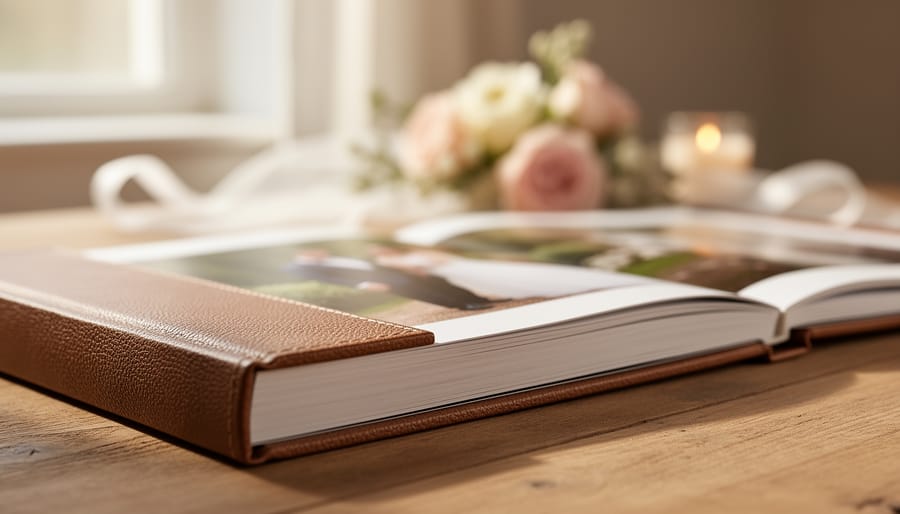
Your wedding album transforms hundreds of digital images into a curated love story you’ll hold in your hands for decades. The best albums balance expert design principles with deeply personal storytelling, combining professional layout techniques, quality materials that last generations, and a thoughtful selection process that captures both the grand moments and quiet glances that made your day unforgettable.
Creating a wedding album isn’t simply dumping your favorite photos into a template. It’s the art of sequencing emotion, the science of visual flow, and the craft of preserving what matters most. Whether you’re working with your photographer’s design services or taking the reins yourself, understanding what makes an album truly exceptional will help you avoid the common pitfalls that leave couples with regrets years later.
The challenge many couples face is knowing where to begin. You’re suddenly tasked with narrowing down 800 images to perhaps 80 spreads, choosing between leather and linen covers, deciding on trim sizes and paper stock, and somehow making it all tell your love story with clarity and beauty. Add to that the technical considerations of resolution, bleed lines, and gutter placement, and the process can feel overwhelming during what should be a joyful post-wedding phase.
This guide walks you through every decision point. You’ll discover the key quality factors that separate heirloom albums from those that fade and crack within years, compare the main album types to find your perfect match, get specific recommendations for different budgets and styles, and learn which mistakes trip up even the most detail-oriented couples. By the end, you’ll have the confidence to create an album that feels authentically yours.
What Makes a Wedding Album Worth Designing
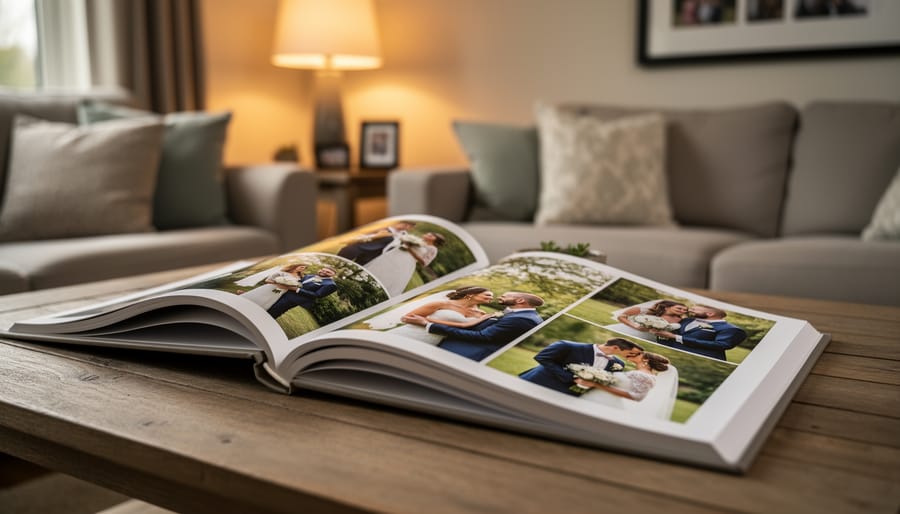
Your wedding album isn’t just another way to view your photos, it’s the physical story of one of the most important days of your life. While digital galleries live on hard drives and get lost in endless phone scrolls, a professionally designed album transforms your wedding memories into something you’ll actually hold, share, and treasure for decades.
The emotional weight of a wedding album goes far beyond its pages. There’s something irreplaceable about turning physical pages with your partner on anniversaries, showing your children where their story began, or watching your parents’ faces light up as they relive the day. Digital files promise convenience, but they rarely deliver connection. An album sits on your coffee table, gets pulled out during family gatherings, and becomes part of your home’s story in ways a password-protected gallery never will.
Custom design matters because your wedding wasn’t generic, and your album shouldn’t be either. A thoughtfully designed album doesn’t just arrange photos chronologically, it recreates the emotional arc of your day. The nervous excitement getting ready, the moment your eyes met during the ceremony, the joy bursting through your reception. Professional album design considers pacing, emotional beats, and visual storytelling in ways that random photo dumps or automated templates simply can’t capture.
The practical advantages run deeper than sentiment. Quality albums use archival materials that protect your images from fading, yellowing, and deterioration. They’re printed with professional-grade techniques that maintain color accuracy and detail sharpness. Unlike digital files that require format conversions, software updates, and backup strategies, a well-made wedding album needs nothing but a shelf. It’s permanent, accessible, and immune to the inevitable march of technological obsolescence.
Investing in album design means your wedding memories won’t fade into your camera roll alongside grocery lists and memes. They’ll exist as art, as history, as heirlooms that tell future generations exactly how your forever began.
Key Factors to Consider When Designing Your Wedding Album
Album Size and Format
Choosing the right size and format for your wedding album shapes how you’ll relive your day and where you’ll display your memories. Larger albums (12×12 or 14×11) create stunning visual impact on coffee tables and bookshelts, giving your photographer room to showcase panoramic venue shots and full-spread ceremony moments. These statement pieces become the centerpiece of your home, inviting guests to explore your story with every page turn.
Smaller formats (8×8 or 10×10) offer intimate charm while remaining budget-friendly, and they’re easier to store or hold in your lap during anniversary reflections. While 4×6 wedding albums work well for casual prints, they don’t provide the canvas needed for professional album design layouts.
Square formats suit modern, gallery-like presentations with centered compositions and symmetrical designs. Landscape orientation (horizontal) excels at storytelling flow, mimicking how we naturally scan left to right, and accommodates wide shots of your sweeping venue, bridal party lineups, and reception scenes. Portrait orientation works beautifully for fashion-focused couples wanting to emphasize dress details and vertical architectural elements.
Consider where you’ll keep your album and how you’ll share it. A 12×12 demands dedicated display space but rewards you with museum-quality impact. An 8×10 landscape fits most shelves while maintaining professional layout integrity, making it the sweet spot for many couples balancing impact with practicality.
Cover Materials and Finishes
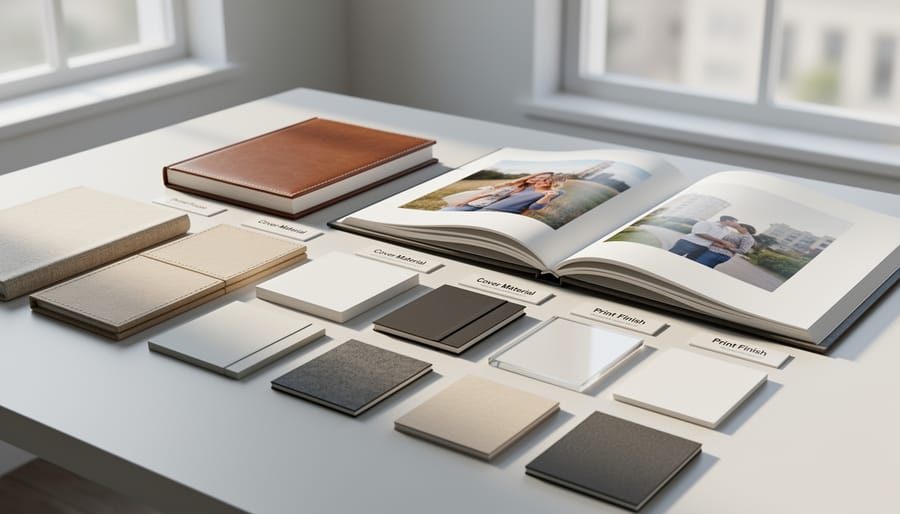
The cover of your wedding album sets the first impression and influences how the piece ages over time. Each material brings its own character, durability, and price point to consider.
Leather remains the gold standard for wedding albums. Genuine leather develops a rich patina as it ages, becoming more beautiful with the decades. It offers exceptional durability and feels substantial in your hands. You can emboss names, dates, or monograms directly into the surface for elegant personalization. Italian leather and full-grain options represent the premium tier, while bonded leather provides a more accessible price point with similar aesthetic appeal. Expect leather to be the most expensive choice, but it’s an investment in longevity.
Linen covers deliver a sophisticated, textile look that suits both classic and modern aesthetics. The fabric texture photographs beautifully and comes in an array of colors beyond traditional white and ivory. Linen resists fading and handles well, though it’s more susceptible to staining than leather. Debossing and foil stamping work wonderfully on linen for customization.
Silk and velvet options create a luxurious, soft-touch experience. These fabrics photograph gorgeously but require more careful handling and storage to prevent marks and wear. They’re stunning choices for couples prioritizing immediate visual impact.
Acrylic and metal covers represent contemporary alternatives. Clear acrylic showcases your favorite image as the cover itself, creating a gallery-like presentation. Metal covers offer industrial-chic appeal and exceptional durability. Both materials suit modern weddings and couples wanting something distinctive.
The right cover material balances your aesthetic preferences with practical considerations like how often you’ll handle the album and where you’ll display it.
Page Layout and Design Style
The layout style you choose fundamentally shapes how guests experience your wedding story when they flip through your album. It’s not just aesthetic preference, different approaches control pacing, emotional emphasis, and how memories unfold across each spread.
Classic single-image layouts place one or two carefully selected photos per page, often centered with generous borders. This traditional approach gives each moment breathing room and creates a formal, timeless feel. It works beautifully for highlighting key moments, your first look, the ceremony kiss, portraits, but can feel static if used throughout a 60-page album.
Magazine-style layouts arrange multiple images across double-page spreads with varied sizes, creating visual rhythm and dynamic storytelling. You might see a large ceremony photo paired with three smaller detail shots, or a sequence of getting-ready moments flowing together. This editorial approach mirrors how professional publications tell stories and keeps viewers engaged as their eyes move across the composition. It’s particularly effective for capturing the energy and flow of your wedding day.
Artistic storytelling layouts blend images with creative text placement, overlapping photos, or unexpected compositions. Some designers incorporate vows, lyrics, or timeline elements directly into spreads. This approach creates something truly distinctive but requires careful balance, too much creativity can distract from the photography itself.
Consider mixing layouts throughout your album. Reserve single-image pages for your most powerful shots, use magazine spreads for sequences and energy, and employ artistic touches sparingly for emphasis.
Print Quality and Paper Options
The paper and printing quality of your wedding album directly affects how your images look today and how they’ll hold up decades from now. These technical choices might seem minor during the selection process, but they’re fundamental to preserving your memories.
Paper weight matters more than most couples realize. Professional album papers typically range from 200 to 400 GSM (grams per square meter). Thicker papers feel more luxurious when you turn the pages and resist warping or creasing over time. They also handle ink better, preventing bleed-through that can affect double-sided layouts.
The finish you choose changes how your images appear. Matte finishes eliminate glare and fingerprints, creating an elegant, gallery-like presentation that works beautifully in any lighting. Lustre strikes a balance with subtle sheen that enhances colors without overwhelming reflection. Glossy finishes deliver maximum color saturation and contrast, making images pop with vibrance, though they show fingerprints more easily and can create glare under bright light.
Printing technology influences longevity and color fidelity. Digital printing offers excellent color accuracy and consistency, with modern archival inks that resist fading for 100+ years when properly stored. Traditional press printing, while less common for albums now, can deliver rich blacks and smooth tonal gradations that some photographers prefer for their artistic quality.
Ask your photographer which papers they’ve tested with their editing style. Color-rich, warm-toned photography often shines on lustre or glossy finishes, while moody, fine-art images suit matte beautifully.
Types of Wedding Album Designs Compared
Traditional and Classic Designs
Traditional wedding album designs honor the formal elegance that has defined wedding photography for generations. These layouts favor symmetry, restraint, and a refined aesthetic that lets each photograph command attention without competing design elements.
Classic designs typically feature one or two carefully selected images per page, often centered with generous white space or framed by subtle borders. This approach creates a gallery-like presentation where each moment receives its own spotlight. You’ll find formal portraits, ceremony highlights, and reception details arranged in chronological sequence that mirrors the wedding day’s natural progression.
The hallmark of traditional design is its timeless quality. Rather than following current trends, these albums employ proven compositional principles: balanced arrangements, elegant serif typography for names and dates, and muted design accents that complement rather than distract. Matting effects and thin border treatments add polish without overwhelming the imagery.
This style particularly suits couples who embraced formal wedding traditions, classic venues, and refined aesthetics. Traditional albums age beautifully because their conservative approach never feels dated, the same qualities that made them elegant decades ago ensure they remain cherished heirlooms for generations.
Modern and Magazine-Style Designs
Modern magazine-style albums embrace the editorial aesthetic of high-end publications, treating your wedding day like a fashion spread or lifestyle feature. These designs break free from traditional grid constraints, using full-bleed images that extend to the page edges without borders or white space interruptions. The result feels immersive and cinematic, pulling you directly into each moment.
Dynamic compositions layer multiple images on single spreads, a large hero shot anchored by smaller detail photos creates visual hierarchy and pacing. Asymmetrical arrangements add energy: an image might span two-thirds of a page while another occupies the remaining third, or photos cascade diagonally across spreads. This approach works beautifully for active moments like dancing, speeches, or ceremony processionals where movement and emotion build across the sequence.
Contemporary albums also incorporate design elements like typography overlays, geometric shapes, and varied image sizes that guide your eye through the narrative. The magazine style suits couples who want their album to feel current and sophisticated rather than formal, prioritizing storytelling flow over symmetrical predictability. These designs age well because they focus on authentic moments captured with intention.
Artistic and Creative Designs
Artistic and creative album designs transform your wedding story into a visual art piece that breaks traditional boundaries. These albums embrace unconventional layouts, experimental compositions, and bold design choices that reflect couples who see their wedding as a creative expression rather than a formal ceremony.
Mixed media elements distinguish artistic albums from standard designs. Photographers might overlay textures, incorporate hand-drawn illustrations, blend color and black-and-white processing within single spreads, or add graphic design elements that enhance rather than overshadow your images. Text integration goes beyond simple date stamps, vows, song lyrics, or meaningful quotes weave through pages as design elements themselves, creating deeper narrative layers.
Compositional approaches take risks: images might bleed across entire spreads, overlap in unexpected ways, or appear in irregular shapes and sizes that create visual rhythm. Some designers incorporate negative space as a deliberate artistic choice, while others layer images densely to convey energy and emotion.
These albums suit couples with strong aesthetic visions who want their album to feel like a coffee table art book. If your wedding reflected your unique style, from the engagement wardrobe tips you followed through the ceremony decor, an artistic album becomes the natural extension of that creative journey, designed to spark conversation and showcase your distinctive love story.
Minimalist and Clean Designs
Minimalist wedding albums embrace the philosophy that less is more, allowing your photographs to command attention without competing with elaborate design elements. These albums feature generous white space, simple single-image layouts, and restrained typography that never overshadows the imagery itself.
The clean aesthetic works particularly well for couples who value timeless elegance over trendy design flourishes. By stripping away decorative borders, complex backgrounds, and busy arrangements, minimalist albums create a serene, gallery-like presentation where each photograph receives its own moment to shine. The design becomes invisible, directing all focus to the emotions, details, and story captured in your images.
This approach also ages beautifully, decades from now, the simplicity will still feel fresh and sophisticated rather than dated by period-specific design trends.
Working with Your Photographer on Album Design
Your photographer is your creative partner in designing an album that authentically captures your wedding day, and the collaboration works best when you communicate openly from the start. Before you commit to your photo and video package discuss album options, pricing, and what’s included versus what costs extra so there are no surprises later.
Start by sharing your vision honestly. Show your photographer examples of albums you love, explain what draws you to certain layouts or styles, and describe the feeling you want the finished album to evoke. At the same time, trust their expertise. They’ve designed dozens or hundreds of albums and understand what works visually, how images flow together, and which of your wedding photos will translate best to print. The sweet spot is expressing your preferences while remaining open to their professional guidance.
Ask these key questions early in the process to set clear expectations:
- What is the typical turnaround time from when we approve our gallery to receiving the finished album?
- How many design revisions are included, and what happens if we need more changes?
- Will you select the images and create the initial layout, or do we choose our favorites first?
- Can we see a digital proof before the album goes to print?
- What level of input can we have on specific layout decisions, text placement, or design elements?
Timeline matters more than most couples realize. Don’t wait months after your wedding to start the album design process. Your photographer’s schedule fills up with new weddings, and the longer you delay, the harder it becomes to prioritize your project. Aim to begin within three to six months of receiving your final gallery while the day still feels fresh in your memory.
During revisions, be specific about what you’d like changed rather than giving vague feedback. Instead of “I don’t love this spread,” try “Could we swap the ceremony exit photo for one where we’re both laughing?” Precision helps your photographer nail your vision faster and makes the revision process smoother for everyone.
Remember that album design is a conversation, not a transaction. Your photographer wants you to love the finished product as much as you do. Approach the collaboration with patience, clear communication, and mutual respect, and you’ll end up with an album that beautifully tells your story.
Recommendations: Best Wedding Album Options for Different Needs
Best for Traditional Weddings
For couples who celebrated a formal church ceremony, ballroom reception, or classic wedding aesthetic, a traditional leather-bound album with rich, timeless appeal deserves consideration. Look for genuine leather covers in deep burgundy, navy, or black with embossed details or custom foil stamping, these materials develop character and warmth over decades. Pair the substantial cover with heavyweight matte or lustre paper (at least 80lb stock) that handles formal portraiture beautifully without distracting glare.
Choose formal page layouts that honor symmetry and elegance: single centered portraits, paired images with classic borders, or dignified two-page spreads that give each moment proper reverence. Avoid trendy overlays or busy compositions, simplicity endures. These albums typically feature matted pages that create depth between spreads, adding a museum-quality presentation. The result feels like a family heirloom from the moment you open it, perfectly suited to ceremonies steeped in tradition and formality.
Best for Modern and Minimalist Couples
Modern and minimalist couples thrive with albums that let their imagery breathe. Consider flush-mount albums with seamless lay-flat binding, they eliminate center gutters, allowing full-bleed spreads where your frame-worthy wedding photos extend edge to edge without interruption. Acrylic covers deliver contemporary sophistication with their transparent or frosted finish, while natural linen in dove gray or oatmeal offers understated elegance. Opt for matte or lustre paper rather than glossy, it reduces reflections and keeps focus on composition and light. Choose layouts with generous white space, one to three images per spread maximum, and resist ornamental borders or decorative fonts. The goal is timeless simplicity where design recedes and your photography commands attention.
Best for Budget-Conscious Couples
Quality doesn’t have to mean expensive when you’re designing your wedding album. A 10×10-inch album with a fabric cover and digital printing delivers stunning results at a fraction of the cost of larger luxury options, typically ranging from $400 to $800 compared to $1,500+ for premium alternatives. Consider ordering a single main album for yourselves and smaller 8×8-inch parent albums (around $200 each) instead of multiple full-size copies. If you’re managing an album budget under $5,000 for your entire wedding photography package, ask your photographer about albums with fewer spreads (20-30 pages versus 40+) or selecting your top 100 images rather than including the entire gallery, which reduces design time and printing costs while still creating a beautiful keepsake.
Best for Storytelling and Narrative Focus
When your wedding day narrative matters as much as individual portraits, a larger format album with magazine-style layouts gives your story room to breathe and unfold naturally. A 12×12-inch or 14×11-inch album provides the canvas for sequential storytelling, allowing multiple images per spread that capture the emotional arc of your day from getting ready through your grand exit.
Magazine-style layouts excel at narrative flow because they let you include transitional moments often excluded from traditional albums: your hands trembling as you button your dress, guests arriving and greeting each other, the quiet seconds before you walk down the aisle. These connecting images transform your album from a highlights reel into a cinematic experience.
For couples who want to include extensive coverage, consider 40 to 60-page albums rather than the standard 20 to 30 pages. This additional space accommodates more intimate details and guest interactions without sacrificing the impact of major moments. Layflat binding becomes essential at this scale, eliminating center gutters that would interrupt panoramic ceremony shots or ballroom scenes.
Your photographer’s storytelling expertise truly shines in this format. Trust their sequencing instincts while providing input about which moments held special meaning that might not be visually obvious, like a toast referencing an inside joke or a dance with someone traveling from abroad.
Common Mistakes to Avoid When Designing Your Wedding Album
Even couples who carefully research album options can stumble when it comes to executing their vision. Understanding common mistakes helps you sidestep frustration and create an album that truly honors your wedding day.
Overloading Pages with Too Many Images
The temptation to include every great photo is real, but cramming too many images onto spreads creates visual chaos rather than storytelling impact. When pages feel crowded, individual moments lose their emotional weight. Your eye doesn’t know where to land, and meaningful photographs compete for attention instead of complementing each other. A well-designed album embraces intentional editing, giving your best images room to breathe and letting key moments command full pages when they deserve it. Trust that 80 to 120 thoughtfully selected photographs tell a more powerful story than 200 crammed into the same space.
Procrastinating the Design Process
Life after the wedding gets busy quickly, and album design easily slides down the priority list. Many couples delay for months or even years, and the longer you wait, the harder it becomes to make decisive choices about image selection and layout. Your photographer’s memories of your day also fade with time, which can affect the storytelling guidance they provide. Most photographers include album design within a specific timeframe after your wedding, often six months to a year. Beyond that window, rush fees or reduced availability may apply. Start the process within two to three months of receiving your final gallery while the emotions and details remain fresh.
Ignoring the Narrative Flow
Treating your album like a random collection of pretty pictures rather than a cohesive story creates a disjointed experience. The sequence matters enormously. Your album should guide viewers through your day with intentional pacing, building from getting ready through ceremony climax to reception celebration. Jumping erratically between moments or over-representing one part of the day while neglecting others disrupts this natural rhythm.
Watch out for these specific pitfalls that diminish storytelling impact:
- Including too many nearly identical shots from the same moment instead of choosing the single best image
- Neglecting transitions between major portions of your day, which creates jarring jumps in the narrative
- Choosing design elements based on current trends rather than timeless appeal that will age gracefully
- Forgetting to represent important people and relationships in favor of only portrait-style images
- Overlooking candid emotional moments in favor of exclusively posed photographs
Poor Communication with Your Photographer
Assuming your photographer will intuitively understand your preferences without clear communication leads to revision rounds that could have been avoided. Share inspiration images, discuss which moments matter most to you, and be specific about any must-include photographs. Equally important: provide feedback promptly during the design process rather than waiting weeks between revisions. Long delays extend your timeline and can result in forgotten context about earlier design decisions.
Neglecting Practical Considerations
Choosing materials or formats based purely on aesthetics without considering your lifestyle creates regret later. A stunning white silk cover might not be practical for a family that will frequently handle the album with children around. An oversized coffee table album looks impressive but may not fit your actual display space. Think honestly about how you’ll interact with this album over decades, not just how it photographs on your wedding anniversary.
Frequently Asked Questions About Wedding Album Design
How long should you expect to wait for your album? Most wedding albums take 8-12 weeks from initial design presentation to final delivery, though this timeline varies based on your photographer’s workload, the complexity of your design, and how many revision rounds you need. The actual design process typically takes 2-4 weeks, but shipping custom-printed albums (especially those with premium materials or international production) adds several more weeks. Plan ahead if you want your album ready for a specific occasion like an anniversary or family gathering.
Can we make changes after we’ve approved the design?
Most photographers allow minor adjustments (like fixing a typo or swapping one image) shortly after approval, but significant design changes after final approval typically require additional fees since the album may already be in production. Always review carefully before giving final approval.
What’s typically included in album design services?
Standard album design services include image selection and retouching, custom layout design, a certain number of revision rounds (usually 2-3), professional printing, and premium materials like leather or linen covers. Additional copies, rush processing, or extensive redesigns often cost extra.
How do we preserve our wedding album over the years?
Store your album flat in a cool, dry place away from direct sunlight and humidity. Handle it with clean hands, and consider keeping it in the protective box it arrives in when not on display. Quality archival printing and materials ensure your album will look beautiful for generations with basic care.
Should we order parent albums at the same time as our main album?
Yes, ordering parent albums with your main album usually saves money since your photographer can adapt the existing design more affordably than creating it from scratch later. It also ensures all albums are produced with matching materials and print quality.
The revision process deserves special attention because it’s where miscommunication often happens. Your photographer will typically present a complete draft of your album design for your feedback. This is your opportunity to request image swaps, layout adjustments, or text changes. Be specific in your feedback rather than vague, pointing out exactly which spreads need adjustment and why helps your photographer implement your vision accurately. Most design packages include two to three revision rounds, so prioritize your most important changes first rather than making small tweaks across multiple rounds.
Understanding what customization your photographer offers helps set realistic expectations. Can you choose your own cover inscription font? Will they incorporate design elements from your wedding invitations? Are there limits on how many images can appear per spread? These details vary significantly between photographers and album manufacturers, so clarify them early in the process before you’ve invested too much mental energy in ideas that might not be feasible within your chosen service package.
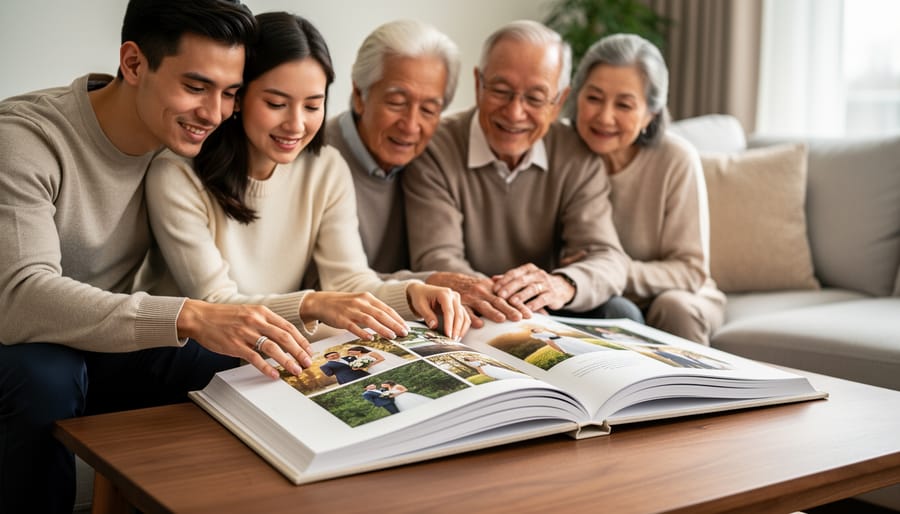
Your wedding album is more than a beautiful book sitting on your coffee table. It’s the physical embodiment of promises made, tears shed, laughter shared, and the beginning of your forever. Years from now, when you pull it off the shelf, you won’t just see images. You’ll feel the nervous excitement of getting ready, hear the tremble in your partner’s voice during vows, remember the warmth of your grandmother’s embrace. That sensory time machine you create through thoughtful album design becomes irreplaceable as memories soften with time.
Investing in professional album design means trusting someone to honor your story with the care it deserves. The right materials, layouts, and printing choices ensure your grandchildren will hold the same vibrant images you see today, physically connecting them to a day that shaped your family’s history. This isn’t about perfection or keeping up with trends. It’s about authenticity, preserving the real moments that made your wedding uniquely yours.
As you begin this process, approach it with intention rather than obligation. Collaborate closely with your photographer, share what matters most to you, and trust their expertise in translating your day into a cohesive narrative. The time you invest now in designing your album thoughtfully will reward you with something truly meaningful: a tangible legacy that tells future generations exactly how your love story began.