
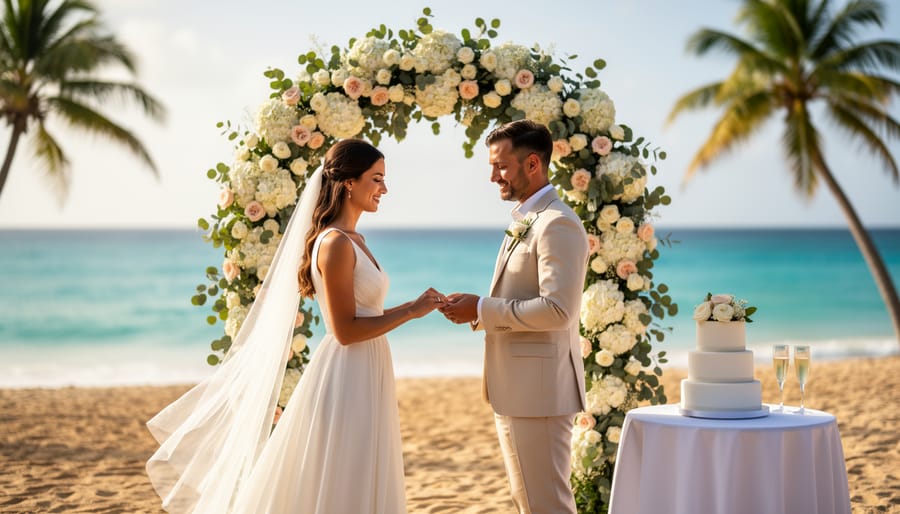
Vacation wedding packages range from roughly $1,500 for a barebone ceremony at an affordable resort to $50,000 or more for a lavish celebration at a luxury property, but most couples spend between $5,000 and $15,000 for a mid-tier all-inclusive experience that covers the essentials. Your final price hinges on three pivotal factors: the destination (Caribbean resorts typically cost less than European villas), the guest count (many complimentary packages accommodate only 10 guests, while upgrades for 50 or more inflate costs sharply), and what you want beyond the standard ceremony venue, officiant, basic décor, wedding cake, and champagne toast that most packages include.
If you’re exploring budget-friendly options, all-inclusive under $5,000 packages exist at select resorts, particularly when you take advantage of promotional offers like the complimentary Sweetheart Wedding Package available at Sandals resorts for couples who stay a minimum of seven nights. The challenge isn’t simply choosing the lowest price. It’s understanding which elements are bundled into your package fee and which customizations will cost extra, so you can compare what you’re actually getting for your money.
This guide breaks down vacation wedding package pricing by destination type, explains the variables that shift costs up or down, clarifies what’s typically included versus what requires an add-on fee, and weighs whether a package offers better value than coordinating vendors yourself from afar. You’ll walk away with clear benchmarks, practical cost-control strategies, and the confidence to select a package that aligns with both your vision and your budget.
Vacation Wedding Package Costs by Destination Type
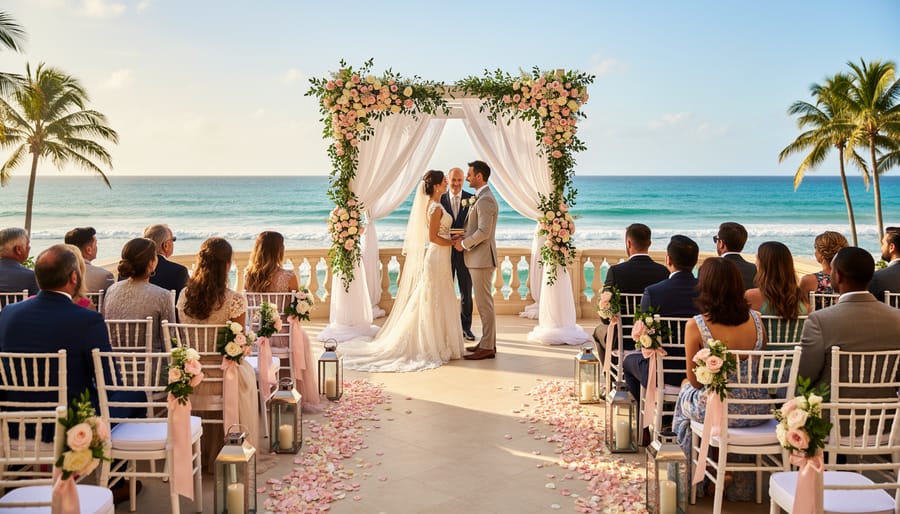
Location shapes everything in vacation wedding pricing. An all-inclusive Caribbean resort delivers a very different cost structure than a European villa or a California vineyard, and understanding these distinctions helps you align your budget with your destination dreams.
All-inclusive resorts anchor the lower end of the destination wedding spectrum. Caribbean properties typically charge $2,000 to $8,000 for couples-only packages, with prices climbing to $10,000 to $20,000 when you bring 20-50 guests. These packages bundle ceremony venues, officiants, basic décor, wedding cakes, and champagne toasts. Jamaica resorts occasionally run promotions where upgraded packages for up to 50 guests become complimentary with qualifying stays, though the real cost lies in the accommodation requirement. Most properties mandate a minimum 5 to 7-night stay for the couple and often expect guests to book multiple rooms at standard rates.
| Destination Type | Typical Price Range | Guest Accommodation | Standard Inclusions |
|---|---|---|---|
| All-Inclusive Resorts | $2,000, $20,000 | 10-50 guests | Venue, officiant, basic décor, cake, toast |
| Boutique Tropical Venues | $8,000, $25,000 | 20-80 guests | Venue, coordinator, some décor, catering minimum |
| European Destinations | $15,000, $40,000+ | 30-100 guests | Venue rental, legal documentation, minimal services |
| Domestic Getaway Locations | $5,000, $18,000 | 20-75 guests | Venue, tables/chairs, linens, catering included |
Boutique tropical venues occupy the middle ground. Think private villas in Mexico, beachfront properties in Costa Rica, or garden estates in Hawaii. These settings run $8,000 to $25,000 for the venue and core services, accommodating 20 to 80 guests. Unlike resort packages where everything runs through a single property, boutique venues often require you to coordinate separate vendors for catering, photography, and florals. Many enforce food and beverage minimums starting at $20,000, which can absorb much of your budget when hosting larger groups.
European destinations command premium pricing. Italian villas, French châteaus, and Greek island venues start around $15,000 just for venue rental and climb past $40,000 when you factor in legal requirements, international vendor coordination, and elevated service standards. European weddings accommodate 30 to 100+ guests but rarely include the comprehensive service bundles you’d find at Caribbean resorts. You’re paying primarily for the setting and prestige, then building your wedding à la carte.
Domestic getaway locations like California wine country, mountain lodges in Colorado, or coastal properties in Maine offer compelling middle-tier options. Packages typically run $5,000 to $18,000 and include tables, chairs, catering, drinks, and linens for 20 to 75 guests. These venues deliver the destination wedding experience without international travel complexity, making them particularly attractive when your guest list includes elderly relatives or families with young children.
What’s Included in Vacation Wedding Packages
Core Ceremony Elements
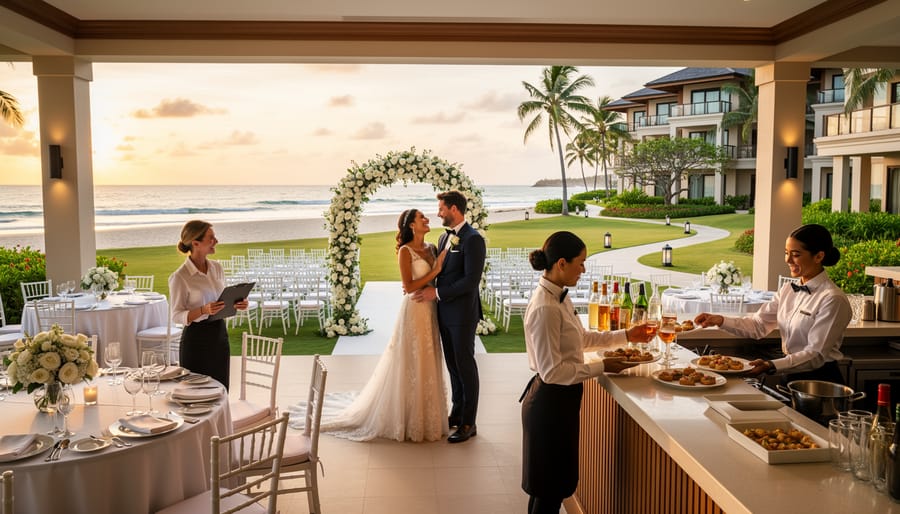
At the heart of every vacation wedding package lies a foundational set of ceremony essentials that turn a simple gathering into a legally or symbolically recognized union. Most destination wedding packages include a ceremony venue, whether that’s a beachfront setting, tropical garden, or resort terrace, along with an officiant to perform the ceremony. You’ll typically find basic décor elements covered as well, such as chair sashes, aisle runners, or a wedding arbor (often available in white or natural wood finishes).
A wedding cake and champagne toast round out the standard ceremony inclusions, providing those classic celebration moments without additional fees. These core elements ensure you can say your vows and celebrate with your closest guests without piecing together vendors from scratch. The ceremony venue fee may be reduced as part of promotional packages, particularly during peak booking windows.
What separates basic packages from premium ones often comes down to the scale and style of these included elements, a simple arbor versus elaborate floral installations, a single-tier cake versus a custom design, standard seating versus upgraded ceremony furniture. Understanding what’s truly included in your package’s ceremony foundation helps you identify where you might want to invest in upgrades that reflect your personal style.
Reception and Hospitality Components
Most all-inclusive packages bundle together the core hospitality elements that transform a ceremony into a celebration. You’ll typically find catering and beverage service as centerpieces of these packages, with resort venues offering preset menus that range from plated dinners to buffet spreads. The bar service usually covers well drinks, house wine, and beer for a specified duration, commonly three to four hours, though premium spirits and specialty cocktails often require upgrades.
Venue essentials come standard: tables, chairs, linens, place settings, and basic centerpieces are part of what you’re paying for. Many packages include a wedding cake, champagne toast for guests, and setup and breakdown services. The physical space itself, whether a beachfront terrace or garden courtyard, comes with reduced or waived venue fees when you meet package requirements.
Here’s the catch: minimum spend thresholds. Resorts frequently require a minimum food and beverage expenditure, sometimes reaching $20,000, which effectively sets the floor for your guest count or menu tier. Smaller celebrations may struggle to meet these minimums without adding upgrades, while larger weddings often exceed them naturally. Some venues waive minimums during promotional periods or slower seasons, making booking windows strategic. Understanding what counts toward the minimum, and what doesn’t, helps you evaluate whether a package genuinely fits your celebration size and style.
Common Upgrades and Add-Ons
Most base vacation wedding packages cover the essentials, but they rarely include everything couples envision for their celebration. Professional photography and videography top the upgrade list, these services typically aren’t bundled in standard packages and can add $2,000 to $6,000 or more to your total investment. Since your photos become the lasting memories of your destination celebration, this is where many couples choose to invest beyond the base package.
Enhanced décor transforms basic ceremony setups into personalized celebrations. While packages might include a simple wedding arbor and centerpieces, upgrading to premium florals, specialty linens, custom lighting, or elaborate archways typically costs $1,500 to $4,000 additional. Entertainment upgrades matter too, most packages don’t include DJ services or live musicians, which run $800 to $2,500 depending on the destination and duration.
Other common add-ons include professional hair and makeup services for the wedding party, upgraded cake designs beyond the basic included option, welcome bags for guests, rehearsal dinners, and extended reception hours. Premium bar packages, specialty cocktails, or wine pairings often cost extra even at all-inclusive resorts. Spa treatments, private excursions, and post-wedding brunches round out popular upgrade choices that enhance the destination wedding experience without being essential to the ceremony itself.
What Changes the Price of Your Vacation Wedding

Several factors can swing your vacation wedding budget by thousands of dollars, and understanding them helps you lock in the best value. The variables below explain why two couples at the same resort might pay vastly different amounts for what looks like a similar celebration.
Guest Count and Package Tiers
Your guest list is one of the biggest levers. Many resorts offer complimentary or low-cost packages for intimate weddings, like the complimentary Sweetheart Wedding Package available for up to 10 guests at all Sandals resorts with a minimum 7-night stay. Once you exceed those guest thresholds, pricing jumps. An upgraded package for up to 50 guests at select Jamaica resorts requires a minimum 5-night stay and typically comes with significantly higher fees. Each additional guest beyond the included number adds per-head charges for meals, beverages, and seating, which can quickly escalate your total investment.
Seasonal Timing and Booking Windows
When you marry matters as much as where. Resorts charge premium rates during high season, usually November through April in tropical destinations, when weather is ideal and demand peaks. Booking during shoulder season or less popular months can yield substantial savings. Some resorts sweeten slower periods with promotional benefits, for instance, booking a date for July, August, or December of 2026 may unlock a suite of perks like reduced ceremony venue fees, 10 percent off wedding catering prices, and complimentary extras like an arbor or champagne. These promotions can shift your budget by 15 to 25 percent compared to peak-season pricing.
Legal versus Symbolic Ceremonies
Choosing between legal versus symbolic ceremonies affects both complexity and cost. Legal marriages require documentation, witnesses, marriage licenses, and sometimes government fees or waiting periods that vary by country. These administrative steps add charges for legal officiants, notarized paperwork, and coordination time. Symbolic ceremonies skip the legal formalities, keeping things simpler and often cheaper, though you’ll need to handle legal marriage paperwork at home. If legal status matters to you, factor in those extra costs and plan ahead for document requirements.
Resort Tier and Geographic Location
Not all vacation wedding venues cost the same. A luxury Caribbean resort commands higher package prices than a mid-tier property in Mexico or Central America, even with similar inclusions. European destinations often carry steeper base costs due to higher local service rates and venue fees. Within the same region, boutique properties with exclusive settings typically charge more than large all-inclusive chains. The tier you choose sets the baseline; a five-star resort might start where a three-star property tops out.
Food and Beverage Minimums
Many resorts impose minimum spending requirements on food and beverage services, especially for larger groups or non-all-inclusive venues. A minimum spend of $20,000 in food and beverage services is not uncommon at upscale properties. If your guest count is modest, you might struggle to hit that threshold without upgrading to premium menus, open bars with top-shelf liquor, or extending service hours. Conversely, if you’re hosting a bigger celebration, you may sail past the minimum naturally. Understanding these requirements upfront prevents budget surprises and helps you structure your guest list and menu choices accordingly.
These variables interact, a small off-season wedding with a symbolic ceremony at a mid-tier resort costs dramatically less than a large peak-season legal marriage at a luxury property with high food minimums. Knowing which levers to pull gives you control over your final investment.
Planning Your Own Vacation Wedding vs. Using a Package
The decision between an all-inclusive package and planning your own vacation wedding comes down to how much control you want versus how much time and stress you’re willing to shoulder. Each approach has distinct cost implications and planning realities that affect different couples in different ways.
All-inclusive packages simplify the process dramatically. You’re buying peace of mind along with services, which matters when you’re coordinating a celebration hundreds or thousands of miles from home. The resort handles vendor relationships, understands local requirements for legal ceremonies, and knows which setups work in their spaces. You won’t spend months researching florists in Cabo or negotiating with caterers in Jamaica. This convenience typically costs 15 to 30 percent more than sourcing everything independently, but that premium buys you a single point of contact and protects you from unexpected vendor cancellations or miscommunications across time zones.
DIY vacation weddings can save money if you have time to invest and genuine destination knowledge. Couples who’ve visited a location multiple times, speak the language, or have local connections often piece together vendors successfully. You’ll control every detail and potentially negotiate better rates by booking directly rather than through a resort’s preferred vendor list. But this approach demands serious research hours, careful contract review, and backup plans for vendors who may not show or deliver as promised. The stress factor increases substantially when you’re managing multiple vendors remotely, especially if you’re not familiar with how couples book services in that region.
Pros
- All-inclusive packages provide one contact for all vendors and eliminate coordination stress.
- Packages often bundle ceremony essentials at lower total cost than buying separately.
- Resort packages handle legal requirements and permits in unfamiliar jurisdictions.
- DIY planning allows complete vendor control and potentially significant cost savings.
Cons
- Packages typically cost 15 to 30 percent more than independent vendor booking.
- All-inclusive options limit vendor choices to resort-approved lists.
- DIY requires extensive research, language skills, and local destination knowledge.
- Independent planning carries higher risk of vendor no-shows or miscommunication.
The smart middle ground combines both approaches. Many couples book accommodations and basic ceremony elements through a package, then source photography, videography, and specialty services independently. This hybrid approach secures the venue foundation while giving you control over the services that matter most for lasting memories. When you’re thinking about details like engagement wardrobe tips for your destination pre-wedding shoot, you’ll appreciate having chosen your own photographer who understands your vision rather than accepting whoever the resort assigns.
Packages make the most sense for couples with limited destination knowledge, tight planning timelines, or celebrations during peak season when vendor availability is scarce. DIY suits adventurous planners with flexible schedules, local expertise, and the patience to handle logistics across distance and potentially language barriers.
How to Choose the Right Vacation Wedding Package for Your Budget
Start by getting brutally honest about your guest count and must-have services before you compare a single package. A ceremony venue and champagne toast matter little if you can’t afford to feed everyone properly or capture the day with professional images. Most destination wedding packages include a ceremony venue, officiant, basic décor, a wedding cake, and a champagne toast, but those baseline offerings rarely tell the full story of what you’ll actually spend.
Here’s how to evaluate packages without getting blindsided by hidden costs:
- Count your confirmed guests, not your wishlist. Packages often cap at 10 or 50 guests, and you’ll pay per-person premiums beyond those thresholds.
- List the services you won’t compromise on. If professional photography, live music, or upgraded florals are non-negotiable, find out their cost before you fall in love with a base package price.
- Compare rates across different booking windows. If you book a date for July, August or December of 2026, many resorts offer reduced ceremony venue fees, discounted catering, and complimentary upgrades. Shoulder seasons can deliver better value than peak periods.
- Calculate your true all-in cost by adding food and beverage minimums, vendor fees for outside services, and travel for your photographer if they’re not local. A minimum spend of $20,000 in food and beverage services can erase the savings from a “free” ceremony package.
- Book your photo and video package separately if it’s not included. Base packages rarely cover professional photography, and your images will matter long after the champagne runs out.
Watch for limited-time promotions that genuinely add value. Free weddings in Jamaica are available as a limited-time offer for the upgraded Sweetheart Wedding Package at select resorts, covering up to 50 guests with a minimum 5-night stay. That’s a real saving if Jamaica fits your vision and your guest count aligns.
Read the fine print on what “all-inclusive” actually includes. An all-inclusive wedding venue package typically covers tables, chairs, catering and drinks, and linens, but you might pay extra for linens in your wedding colors, chair sashes, or a cocktail hour setup. Ask for an itemized breakdown of included services and a separate list of common upgrades with their exact prices.
Don’t skimp on photography to squeeze into a lower package tier. You’ll want beautiful images to design your album and relive the celebration for decades. If the resort’s in-house photographer feels like a compromise, budget for an independent professional who matches your style, even if it means scaling back elsewhere.
Vacation Wedding Packages Cost by Key Factor
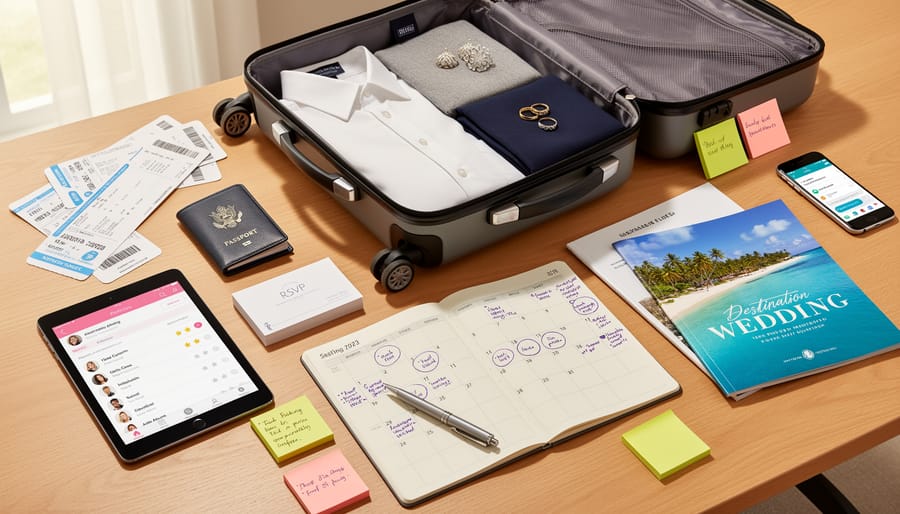
Guest count stands as the single biggest price driver for vacation wedding packages. A couple-only ceremony at a Caribbean resort might cost $1,500 to $3,000, while adding 50 guests can push the total to $15,000 or more once you factor in required food and beverage minimums. Many resorts impose a minimum spend of $20,000 in catering services once your guest list reaches certain thresholds, effectively setting a floor for larger celebrations regardless of how simple you keep other elements.
Location tier creates the next major split. Budget-friendly Mexico or Dominican Republic packages start around $3,000 to $6,000, while premium destinations like St. Lucia, the Maldives, or European venues routinely begin at $10,000 and climb past $25,000. The resort class within each destination matters too: a three-star property versus a five-star adults-only resort can double your baseline cost even in the same country.
Season and booking timing also shift prices noticeably. Booking dates in July, August, or December of 2026 often unlocks promotional benefits like reduced venue fees and complimentary upgrades, while peak winter months at Caribbean resorts command premium rates. Couples who commit early and travel during shoulder seasons typically save 15 to 30 percent compared to last-minute bookings in high season.
Where the Money Goes
When you book a vacation wedding package, your investment typically breaks down across several distinct categories. Understanding where each dollar goes helps you evaluate whether you’re getting fair value and where you might want to reallocate resources.
Venue and ceremony fees usually consume 15-25% of your package cost. This covers the actual location rental, setup and breakdown, basic chairs and decorative elements like arches or arbors, and the officiant’s services. Some resorts charge separately for ceremony venues, while others include a reduced or waived fee when you meet food and beverage minimums.
Food and beverage services represent the largest chunk, often 40-50% of your total spend. Many all-inclusive venues require minimum expenditures (commonly $20,000 or more) that cover your reception catering, bar services, wedding cake, champagne toast, tables, chairs, and linens. The per-person cost scales with your guest count and menu selections.
Accommodations account for 20-30%, particularly when packages require minimum stay commitments for the couple or include complimentary nights as booking incentives.
Coordination and planning services take another 10-15%, covering the resort’s wedding coordinator who handles logistics, vendor communication, and day-of execution.
The remaining 5-10% covers marriage license processing, basic floral arrangements, and standard décor elements. Remember that professional photography, videography, live music, upgraded florals, and premium décor aren’t typically included in base packages, budget separately for these essentials.
What Changes the Price
Beyond choosing your destination or guest count, several behind-the-scenes factors influence what you’ll actually pay. Understanding these variables helps you anticipate costs and negotiate better.
Timing and booking windows create significant price swings. Resorts often run promotions during slower periods, booking dates in July, August or December of 2026 can unlock suites of benefits that trim your bottom line. Conversely, peak wedding season dates command premium rates with less room for negotiation.
Legal versus symbolic ceremonies affect pricing differently across destinations. Legal weddings require additional documentation, witnesses, and processing fees that symbolic ceremonies skip. Some resorts bundle legal requirements into packages, while others charge separately for paperwork and officiants qualified to perform legally binding ceremonies.
Food and beverage minimums shape your flexibility. When venues require $20,000 in food and beverage spending, you’re locked into higher-tier catering and bar options regardless of your guest list size. These thresholds push couples toward premium menus and open bars rather than simpler reception formats.
Length of stay requirements tied to complimentary packages influence overall trip costs. A promotion requiring minimum seven-night stays might offer a free ceremony, but you’re committed to additional accommodation nights that add up quickly across your travel party.
DIY vs Hiring a Pro
Planning a destination wedding yourself means coordinating with international vendors, navigating foreign marriage requirements, and managing logistics across time zones. You’ll typically save 15-25 percent on total costs by booking ceremony sites, caterers, and décor separately, but you’ll invest weeks researching vendor reputations, comparing quotes in unfamiliar markets, and building backup plans for language barriers or service gaps.
The trade-off becomes stark when complications arise. Miss a legal filing deadline or book a photographer who doesn’t show, and you’re troubleshooting from thousands of miles away. Packages transfer that operational risk to resort coordinators who know local regulations, have established vendor relationships, and resolve issues as part of their service. You sacrifice some customization freedom, but gain peace of mind and time to enjoy your engagement instead of managing spreadsheets.
Quality varies widely in both approaches. DIY weddings can achieve stunning personalization when you have destination knowledge or hire a skilled local planner. But most couples lack the on-the-ground expertise to vet vendors or spot red flags in contracts. All-inclusive packages deliver predictable, professional results. They won’t win design awards, yet they execute ceremonies smoothly while you focus on celebrating with guests rather than directing setup crews.
Frequently Asked Questions
Couples considering vacation wedding packages often have similar questions about logistics and budgeting. Understanding what’s standard and what requires extra planning helps set realistic expectations.
What’s typically included in a destination wedding package?
Most destination wedding packages include a ceremony venue, officiant, basic décor, a wedding cake, and a champagne toast. All-inclusive packages at resorts typically add tables, chairs, catering and drinks, and linens for your reception.
Do vacation wedding packages include professional photography?
Most base packages do not include professional photography, or they include only limited coverage with resort staff. You’ll typically need to budget separately for a professional photographer to capture your celebration with the quality and attention it deserves.
How far in advance should I book a vacation wedding package?
Booking 9-12 months ahead gives you the best venue selection and allows guests time to plan travel. Some resorts offer promotional benefits for booking specific months, for example, dates in July, August, or December of 2026 may come with special perks at certain properties.
Are guests responsible for their own accommodations?
Yes, guests typically pay for their own rooms and travel, though you may secure group rates at your venue. Some packages require minimum stays for the couple (often 5-7 nights) and may extend discounts to your guest block.
The answers to these questions shape your initial planning conversations. When you understand what’s genuinely covered, you can budget accurately for professional services that matter most to you, whether that’s photography, upgraded flowers, or entertainment, without getting surprised by hidden costs later. Think of the package as your foundation, and plan for the thoughtful additions that will make your celebration uniquely yours.
Vacation wedding packages offer genuine value for couples who want to celebrate in a beautiful setting without the overwhelm of coordinating dozens of vendors across time zones. The all-inclusive foundation, ceremony venue, officiant, basic décor, cake, and champagne, handles the essentials so you can focus on the experience rather than the logistics. But it’s worth remembering that packages provide a starting point, not necessarily everything you’ll want for your celebration.
Professional photography deserves a line in your budget even when it’s not included in the base package. These moments happen once, in a place you’ve traveled to specifically for this purpose, surrounded by the people you love most. Investing in someone who can capture the light, the emotion, and the unique backdrop of your destination ensures you’ll relive those feelings long after you’ve returned home.
Think of your package as the canvas. The thoughtful additions you choose, whether that’s upgraded florals, live music, or a photographer who truly understands your vision, transform a beautiful day into one that feels unmistakably yours. When you say your vows with sand beneath your feet or mountains rising behind you, you’re creating something extraordinary. Make sure it’s preserved as beautifully as it deserves.